Awning Maintenance Checklist for Homeowners in BC
Your awning takes on a lot of scorching Okanagan summers, unpredictable fall rain, and heavy BC winters. Most homeowners don’t think about it until something goes wrong. But a little seasonal attention is all it takes to protect your outdoor living space, maintain your home’s curb appeal, and get the full 7 to 10 years out of your investment. This checklist walks you through everything you need to know, season by season.
Why Regular Awning Maintenance Matters in BC
Living in BC especially in the Okanagan means your awning faces conditions that homeowners in milder climates never have to think about. Intense summer UV, freezing winters, and everything in between puts real stress on fabric, frames, and mechanical components.
Skip the upkeep, and the consequences add up fast. Mould takes hold in damp fabric folds. UV damage and fabric fading set in by midsummer if left unchecked. Mounting hardware, fasteners, and brackets that loosen over winter can compromise the entire structure. And an awning left extended during a snowstorm? The snow and wind load alone can bend the frame beyond repair.
The flip side is that consistent preventive maintenance, the kind that takes an hour or two per season is genuinely all it takes to avoid costly repairs and keep your awning functioning the way it should. A well-maintained awning also contributes to your home’s energy efficiency through solar heat reduction, and it keeps your property looking sharp. That’s a meaningful return on a pretty modest time investment.
Your Complete Seasonal Awning Maintenance Checklist
Spring Awning Inspection Checklist (March – May)
Spring is your reset. After months of cold, moisture, and general winter stress, your awning needs a proper look-over before you start relying on it again.
Start with a thorough awning frame inspection check each arm, joint, and hinge for rust, corrosion, or any bending that wasn’t there before. From there, move to your mounting hardware, fasteners, and brackets. Give each one a firm check to make sure nothing has worked loose over winter.
Next, lay your eyes on the fabric itself. Look carefully for fabric tears, holes, and fraying along the seams and edges; these are the spots most likely to have taken wind damage. Check the underside too, where mould and mildew tend to quietly establish themselves in damp conditions. If you spot any early growth, treat it immediately before it spreads into the weave.
Finally, trim back any vegetation near the awning. Overhanging branches and encroaching shrubs are a surprisingly common cause of fabric abrasion and moisture buildup, easy to miss, easy to fix.
Summer Awning Maintenance Checklist (June – August)
Summer is the peak season for your awning and peak season for everything that works against it. UV damage and fabric fading, bird droppings, airborne pollutants, and the occasional sudden windstorm all take their toll.
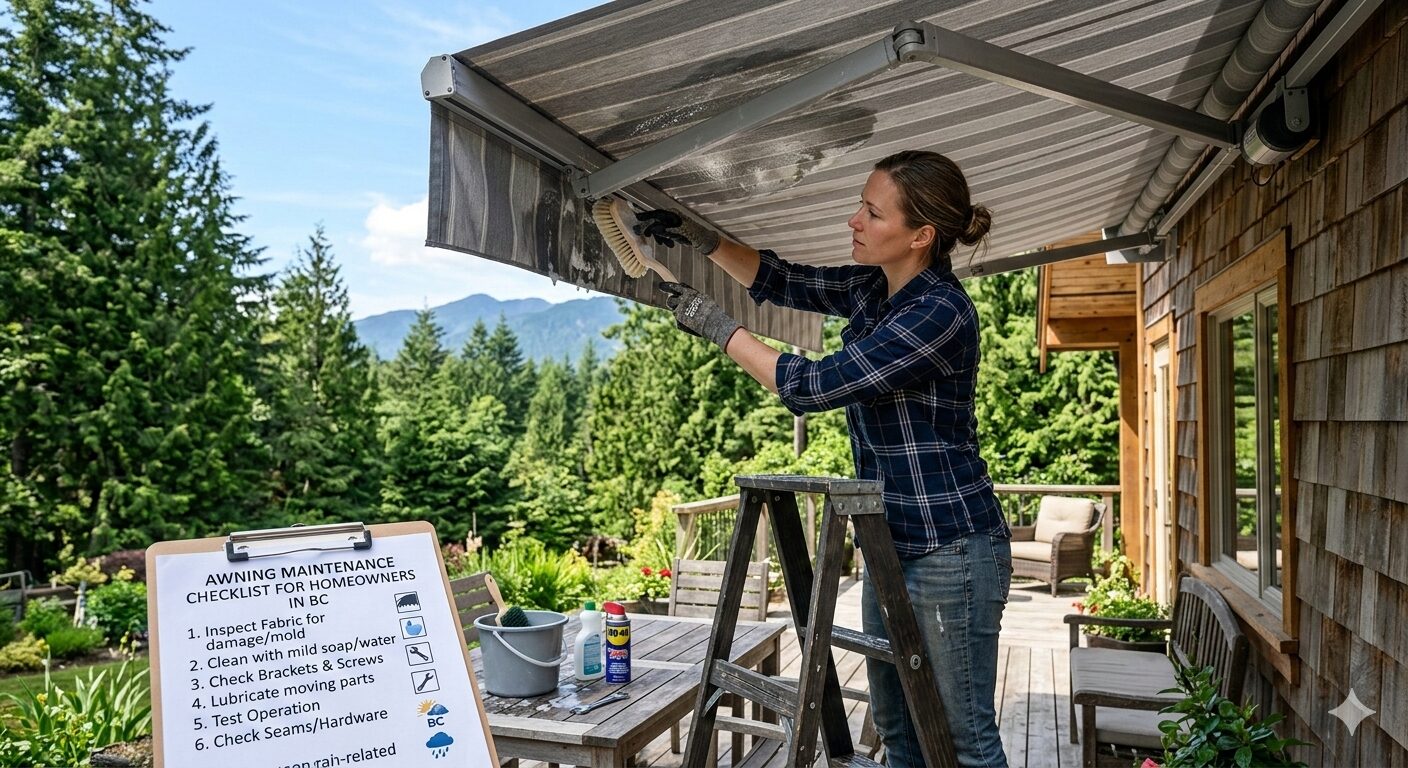
Keep up with regular awning fabric cleaning every four to six weeks during summer. A soft-bristle brush, mild soap, and lukewarm water is all you need to rinse thoroughly and let it air dry fully before retracting. Prompt removal of bird droppings and airborne pollutants is important here; both are acidic and will stain or weaken fabric if left sitting.
The single biggest summer habit that protects your awning? Always retract when not in use during high winds or storms. More retractable awnings are damaged by wind than by any other cause and it’s completely preventable.
Do a mid-season check of the fabric edges, keep the vegetation trimmed back, and keep an eye out for any UV damage that’s showing up as discolouration or stiffness in the fabric.
Fall Awning Inspection Checklist (September – November)
Fall is arguably the most critical maintenance window of the year. You’re closing out the heavy-use season, catching anything that summer may have worn down, and getting the awning ready for whatever BC winter is going to throw at it.
Start with a full spring and fall awning inspection same thoroughness as spring, because you need to go into winter knowing the structure is solid. Repair any fabric tears, holes, and fraying now while conditions are still easy to work in.
This is also the time to handle moving parts lubrication. Use a dry silicone spray lubricant not WD-40, not oil-based sprays on all hinges, pivot points, arm joints, and tracks. Silicone won’t attract grit or freeze up in cold temperatures the way oil-based products can.
Apply a fabric protectant spray or waterproof coating after your final fabric cleaning of the season. This adds a meaningful layer of defence against fall rain and winter moisture. And if you have a motorized unit, take motorized awning motor protection seriously, check the wiring, connections, and motor housing before temperatures drop.
Winter Awning Storage & Winterizing Guide for BC Homeowners
BC winters are not the time to gamble with an extended awning. Snow and wind load is one of the leading causes of frame damage, and it happens fast a single heavy overnight snowfall can do serious structural damage.
Retract the awning before the first snowfall and keep it retracted. If snow does accumulate on a partially extended awning, remove it gently with a soft broom, never a metal implement. Make sure the fabric is completely dry before closing it up for a prolonged period; damp fabric in a closed position is a perfect environment for mould and mildew to develop.
For motorized awning motor protection through winter, cover the motor housing if possible, or bring the unit indoors if it’s designed to be fully removed. Do a final check of all mounting hardware, fasteners, and brackets before the deep cold sets in, this takes five minutes and can prevent a collapse situation mid-January.
How to Clean Awning Fabric the Right Way
Proper awning fabric cleaning is the backbone of your entire maintenance routine. Here’s the process that works without risking damage to the fabric:
Step 1: Extend the awning fully so every section is accessible.
Step 2: Dry brush away loose debris, bird droppings, and airborne pollutants before applying any water.
Step 3: Mix mild dish soap into a bucket of lukewarm water.
Step 4: Scrub gently with a soft-bristle brush work in the direction of the fabric weave, not against it.
Step 5: Rinse thoroughly with a garden hose and allow to air dry completely before retracting.
For mould and mildew prevention, a diluted white vinegar solution tackles most early-stage growth without damaging the fabric. Once dry, follow up with a fabric protectant spray or waterproof coating for added protection through the next wet season.
What to avoid: pressure washers, bleach, abrasive scrubbers, and harsh chemical cleaners. These all compromise fabric integrity faster than dirt ever would.
Lubricating and Inspecting Your Awning’s Moving Parts
Retractable awning maintenance lives and dies by the condition of its moving parts. If the mechanism feels stiff, grinds, or requires force to operate, it’s telling you something.
The right product is a dry silicone spray lubricant applied to all hinges, pivot arms, tracks, and joints. Do this at minimum twice a year once in spring, once in fall. It keeps the mechanism running smoothly and prevents the kind of gradual wear that eventually leads to a costly replacement.
During the same session, do a focused awning frame inspection: check each arm for signs of rust or corrosion, tighten any loose mounting hardware, fasteners, and brackets, and run the awning through a full extend-and-retract cycle. If anything catches or sounds wrong, it’s better to investigate now than after the issue has gotten worse.
Motorized Awning Maintenance: What You Need to Know
Motorized awnings deserve a little extra attention, particularly heading into winter. Motorized awning motor protection means more than just covering the unit it means staying on top of the electronics throughout the year.
Test your remote control and any integrated sensors at the start of each season. Check wiring and electrical connections during the fall inspection for moisture damage or fraying. Keep the motor housing clean and dry year-round. If the motor sounds sluggish or responds inconsistently, address it before winter electrical issues only become harder to diagnose in the cold.
If basic troubleshooting doesn’t resolve the issue, professional awning repair services are the right call. Electrical components aren’t worth DIYing when the cost of getting it wrong is a full motor replacement.
Common Awning Problems and When to Call a Professional
Most seasonal outdoor maintenance tasks are well within reach for any homeowner. But there’s a clear line between routine upkeep and situations that genuinely require expert hands.
Call in professional awning repair services when you’re dealing with significant structural frame damage, motor or electrical failure, major fabric tears, holes, and fraying that compromise the awning’s coverage, or persistent mold and mildew that doesn’t respond to cleaning.
The logic behind preventive maintenance and avoiding costly repairs is simple: a $50 tube of silicone spray and a few hours a year is a very different number than a full frame replacement or fabric re-covering. And knowing when a repair is no longer cost-effective relative to the awning’s age and condition is something a local professional can help you work through clearly.
Bottom line
Awning maintenance isn’t complicated, it’s just consistent. A few hours across the year protects your outdoor living space, preserves your home’s energy efficiency and curb appeal, and keeps your awning running well for a decade or more. If you’re in Kelowna or anywhere across the BC Interior and need expert help with maintenance, repairs, or a new installation, the team at Shutters and Shade is just a call away.