Winter in Kelowna brings more than just picturesque snow-covered landscapes. Freezing temperatures, heavy snowfall, and harsh conditions can wreak havoc on your roll shutters if they’re not properly prepared. Taking the time now to winterize your shutters will save you from costly emergency repairs and keep your property secure throughout the coldest months.
Why Winter Maintenance Matters for Your Kelowna Roll Shutters
Anyone who’s lived through an Okanagan winter knows how quickly temperatures can plummet. When the mercury drops, your roll shutters face serious challenges that can lead to mechanical failures if you’re not careful.
Cold temperatures cause metal components to contract, making everything stiffer and harder to move. That smooth operation you enjoyed all summer? It disappears the moment frost settles in. Worse yet, moisture from snow and ice can seep into vulnerable areas, leading to corrosion and rust that compromises both security and functionality.
The cost of neglecting winter preparation goes beyond just inconvenience. A frozen shutter that won’t open means you can’t access your space. Stiff mechanisms forced to operate can burn out motors or snap springs. And without proper insulation from well-maintained weather seals, you’ll watch your energy bills climb as heat escapes through gaps and cracks.
Complete Your Pre-Winter Inspection
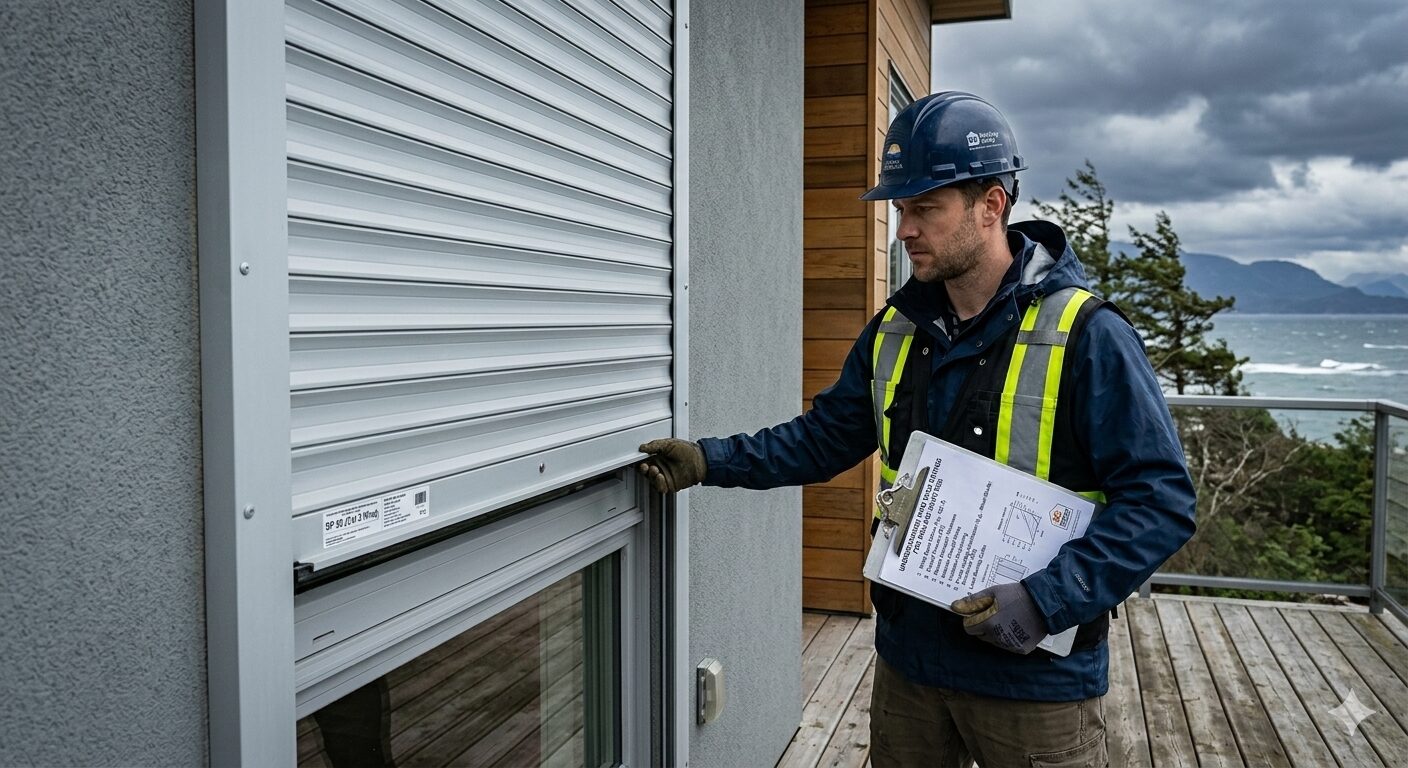
Before the first snowfall hits, walk around and really look at your shutters. You’re checking for anything that might become a bigger problem once winter weather arrives.
Start with the tracks and guide channels. Run your hand along them (carefully) and feel for any rough spots, bends, or debris that’s built up over the months. These channels need to be clear and straight for your shutters to move freely, especially when cold weather makes everything less forgiving.
Move on to the slats and bottom rail. Look for dents, cracks, or any signs of damage. The bottom rail takes the most beating from the elements, so pay extra attention there. Even small issues can turn into major headaches when ice and snow get involved.
Don’t skip the weather seals. These rubber strips might seem minor, but they’re your first line of defense against winter weather. Press on them gently if they feel brittle or you see cracks, they need replacing before winter arrives. Damaged seals let cold air in, moisture through, and drive up your heating costs.
Check your springs next. They should have consistent tension without any visible wear or rust. For electric shutters, turn on the motor and listen. Any grinding, clicking, or unusual sounds? That’s your shutter telling you it needs professional attention before it quits entirely in the middle of January.
Finally, test your locking mechanisms thoroughly. Security matters year-round, but winter break-ins are unfortunately common when properties sit empty for extended periods.
Give Everything a Proper Clean
This isn’t about making your shutters look pretty (though that’s a nice bonus). Cleaning removes debris that traps moisture, which leads to ice buildup and corrosion.
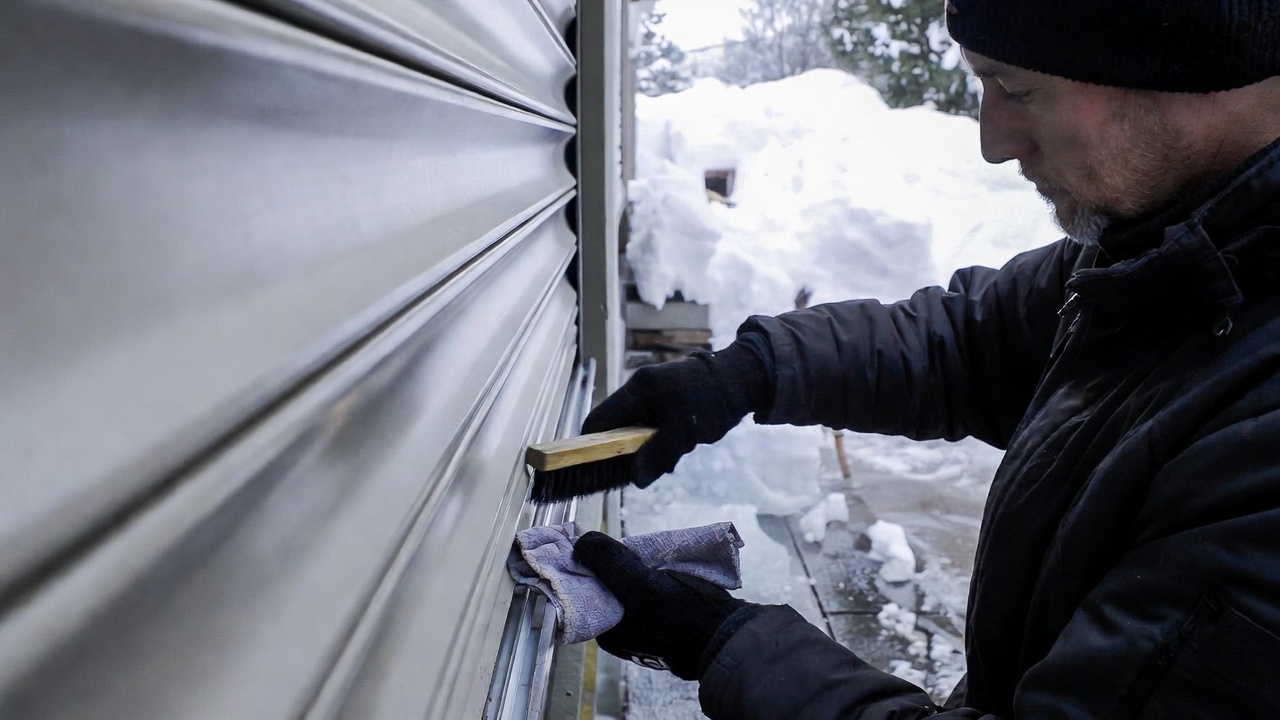
Grab a stiff brush and clear out those tracks and guide channels. You’d be surprised what accumulates in their leaves, dirt, small stones, all sorts of stuff that’ll cause problems when it gets wet and freezes. Get right into the corners where gunk loves to hide.
For the slats themselves, warm soapy water and a soft cloth do the job. Skip the harsh chemicals and abrasive cleaners; they’ll damage protective coatings and actually make your shutters more vulnerable to rust. The bottom rail deserves extra scrubbing since it’s closest to the ground where the worst mess collects.
While you’re at it, make sure drainage holes are clear. These little openings let water escape instead of pooling and freezing inside your shutter mechanism.
Master the Art of Winter Lubrication
Here’s where most people go wrong. They either skip lubrication entirely, use the wrong product, or apply it incorrectly. Let’s get this right because proper lubrication is your best defense against stiff mechanisms and mechanical failures.
Cold temperatures make lubricants thick and sluggish. That’s why choosing the right product matters. Silicone-based lubricants work beautifully in winter because they resist water and maintain their slipperiness even when it’s freezing. Spray them on weather seals, moving parts, and general contact points.
For heavy-duty protection on tracks and anywhere metal meets metal, white lithium grease is your friend. It adheres well, provides excellent rust protection, and handles the temperature swings we get here in Kelowna. Apply a thin, even coat – more isn’t better, it just attracts dirt.
Graphite lubricants excel in the guide channels, especially if you’re in a dusty area. They go on dry, so they don’t pick up debris like oil-based products do. Teflon-based lubricants work great on springs and delicate moving parts where you need friction reduction without the mess.
Here’s the process: Clean first, always. Lubricating over dirt just seals the gunk in place. Then work your way around the shutter systematically tracks, guide channels, moving parts, springs. If you have an electric motor, check if it needs any specific maintenance (your manual will tell you, or call the professionals).
After lubricating everything, test the operation. Open and close your shutters a few times. Everything should move smoothly and quietly. If it doesn’t, you’ve either missed a spot or there’s an underlying issue that needs professional service.
Tackle Winter Weather Challenges Head-On
Even with perfect preparation, you’ll likely face frozen shutters at some point during a Kelowna winter. When it happens, resist the urge to force anything. You’ll cause far more damage than the ice ever would.
If your shutter won’t budge and you see ice buildup, pour warm (not boiling) water along the affected areas. The gentle heat will melt the ice without shocking the metal. Never use a heat gun or torch; the rapid temperature change can warp components and crack seals.
For heavy snow accumulation on top of your shutters, clear it away regularly rather than letting it pile up. Excessive weight can damage the mechanism or even pull your shutter off its guides. Use a soft broom or snow brush, working gently to avoid scratching or denting the slats.
Weather seals do more than keep out drafts; they’re essential for energy efficiency and preventing moisture infiltration that leads to rust and corrosion. If your inspection revealed worn seals, replacing them before winter is a smart investment that pays for itself in lower heating bills.
Special Care for Electric Roll Shutters
Electric motors don’t love extreme cold any more than you do. The good news is that most modern motors are built to handle winter conditions, but they need a bit of help from you.
Make sure the motor housing is properly sealed with no gaps where moisture can sneak in. Test the motor before the cold really sets in if it’s struggling or making odd noises now, it’ll quit entirely once temperatures drop. Many electric shutters have a manual override option, so locate that and make sure you know how to use it before you need it in an emergency.
Know When to Call the Professionals
Some maintenance tasks are perfect for DIY cleaning, basic lubrication, and visual inspections. Others require the expertise and tools that only professional service providers have.
If you notice anything beyond surface-level issues during your inspection, call Shutters and Shade. Strange noises, visible damage to springs or motors, misalignment, or security concerns all warrant professional attention. Trying to fix complex mechanical problems yourself often makes things worse and can void warranties.
Professional maintenance before winter gives you peace of mind. Technicians catch problems you might miss and have the parts on hand to fix issues before they strand you with a non-functioning shutter in the middle of a snowstorm.