If you’ve ever watched your neighbor’s awning flapping violently during one of Kelowna’s sudden windstorms, you already know that not all awnings are created equal. Living in the Okanagan means enjoying beautiful weather, but it also means dealing with unexpected wind gusts that can turn your outdoor investment into an expensive repair bill. Understanding wind ratings isn’t just technical jargon, it’s the difference between years of worry-free outdoor enjoyment and constant stress every time the breeze picks up.
Understanding Awning Wind Ratings
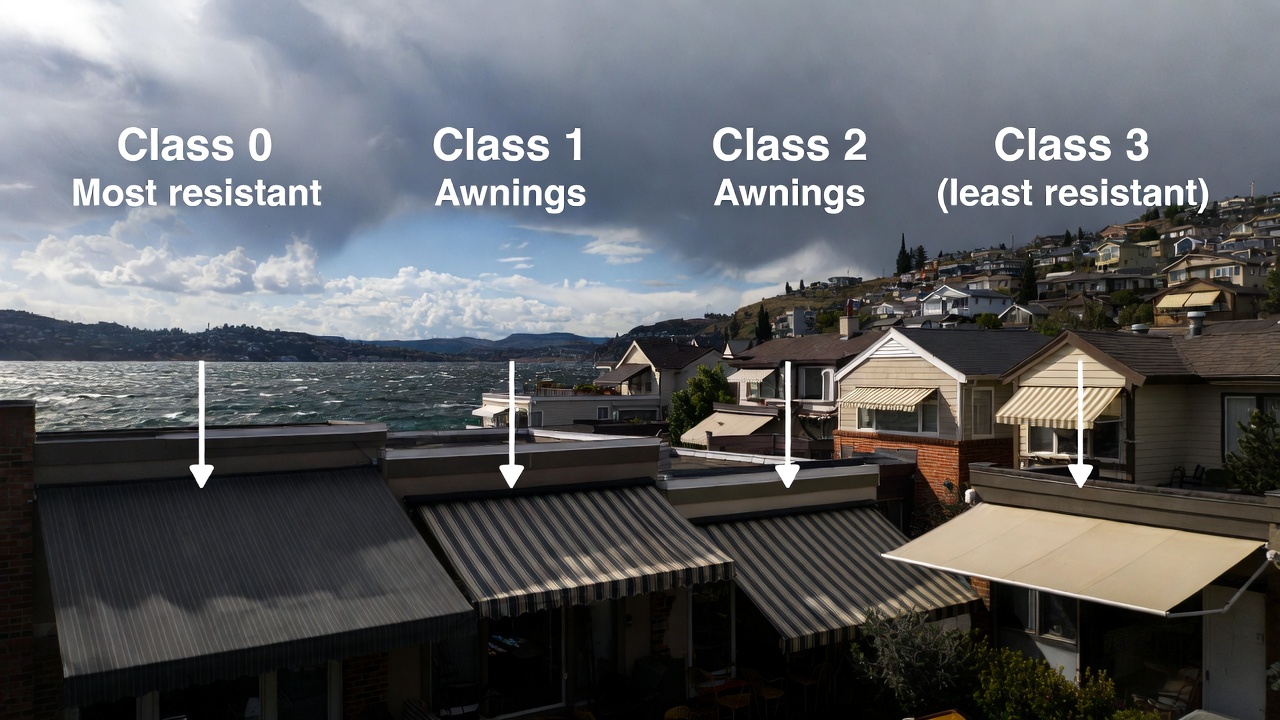
When you’re shopping for an awning in Kelowna, you’ll quickly encounter terms like “wind resistance class” and references to the Beaufort Scale, and here’s what actually matters: wind ratings tell you how much wind your awning can safely handle before you need to retract it think of it like the weight limit on a ladder where ignoring it is at your own risk. Most quality awnings follow the European Norm (EN 13561) standard, which categorizes wind resistance into clear classes where Class 0 awnings handle winds up to 28 km/h (basically a light breeze), Class 1 tolerates up to 38 km/h, Class 2 manages 49 km/h, and Class 3 the most robust option can withstand winds up to 61 km/h, which is roughly the difference between leaves rustling and small branches starting to move. The Beaufort Scale offers another way to think about wind conditions, where Beaufort levels 0-3 represent calm to gentle breezes where most awnings perform beautifully, Beaufort 4-6 (moderate winds) is your warning zone, and anything above Beaufort 7 means your awning should definitely be retracted unless you want to test your homeowner’s insurance.
What Kelowna’s Climate Means for Your Awning
Kelowna sits in a unique microclimate where we get those gorgeous summer afternoons, but we also experience sudden wind shifts, especially during spring and fall, and if your property faces the lake, you’re probably familiar with how wind can pick up seemingly out of nowhere in the afternoon while hillside homes face their own challenges with wind funneling between properties and creating surprisingly strong gusts. Most Kelowna homeowners find that a Class 2 or Class 3 awning makes the most sense because yes, they cost more upfront, but consider this: retracting your awning every time the wind picks up gets old fast, and a higher wind resistance class means more time actually enjoying your outdoor living space instead of babysitting your shade structure.
Different Awning Types Handle Wind Differently
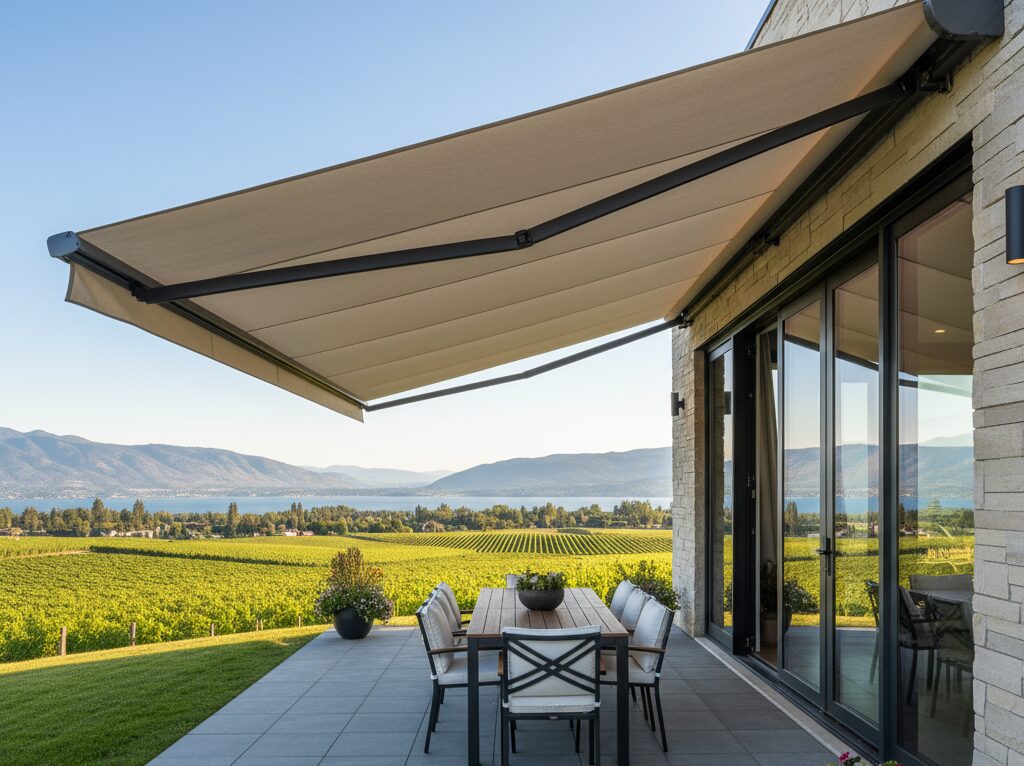
Retractable awnings have become incredibly popular in Kelowna, and for good reason—when properly installed, they give you the flexibility to extend during calm weather and retract when conditions turn sketchy, while motorized awnings take this convenience further since with a remote control or smartphone app, you can retract your awning from inside the house when you notice the trees starting to sway. Lateral arm awnings (also called folding arm awnings) represent the most common style you’ll see around Kelowna, where the extension arms create tension in the fabric canopy, which helps it resist wind better than you might expect, and the key is in the frame construction quality aluminum frames with reinforced joints make all the difference while cheap awnings use thinner aluminum that flexes and eventually fails under repeated wind stress. Cassette awnings offer an extra layer of protection because when retracted, the entire fabric canopy and mechanism tuck into a protective housing, which matters more than you might think since Kelowna’s intense UV exposure and occasional rain can degrade exposed fabric even when the awning is retracted, and the cassette design keeps everything protected until you’re ready to use it.
The Components That Actually Matter
Let’s talk about what makes an awning wind-resistant, starting with the fabric canopy itself which plays a bigger role than most people realize acrylic fabrics tend to be heavier and more durable than polyester, which translates to better wind performance, and the weave density matters too since a tighter weave catches less wind while still providing excellent sun protection. The mounting brackets deserve serious attention during installation because I’ve seen awnings with perfectly good frames fail because someone skimped on the mounting hardware or didn’t anchor into solid material, which is why professional installation isn’t just a recommendation but essential for achieving the wind resistance the manufacturer promises, and your installer should be evaluating your wall or roof structure, not just drilling holes and hoping for the best. Metal frame quality separates the weekend warriors from the professional-grade awnings, so look for frames with powder-coated aluminum that won’t corrode in our climate, where the gauge thickness of the aluminum matters tremendously under wind load because when wind catches your awning, those extension arms experience significant stress, and higher-quality awnings use thicker aluminum and add reinforcement at stress points.
Wind Sensors Are Worth Every Penny
Here’s where technology really earns its keep: wind sensors automatically monitor conditions and retract your motorized awning when wind speed hits a pre-set threshold, and for Kelowna homeowners, this feature pays for itself the first time you’re away from home and a windstorm rolls through. You can typically set your wind sensor to trigger anywhere from 30-50 km/h, depending on your awning’s wind resistance class and your personal comfort level, and the beauty of modern systems is that they integrate with weather sensors too, where some units will retract based on rain, wind, or even approaching storms they detect through barometric pressure changes. Smart awning systems take this further with app-based controls where you can check the weather forecast showing gusty conditions this afternoon and retract your awning from work, or see a storm approaching on radar and protect everything with one tap this isn’t just convenience, it’s insurance against the inevitable day you forget and come home to a damaged awning flapping in the wind.
Protecting Your Investment
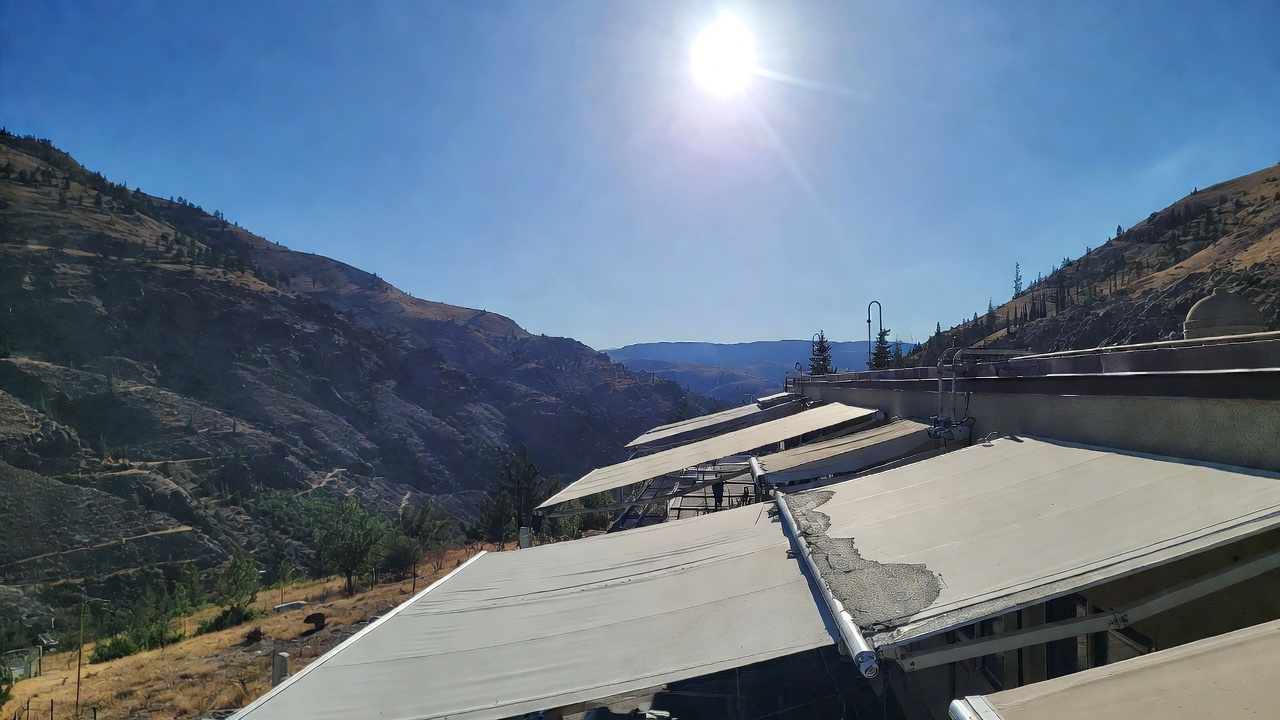
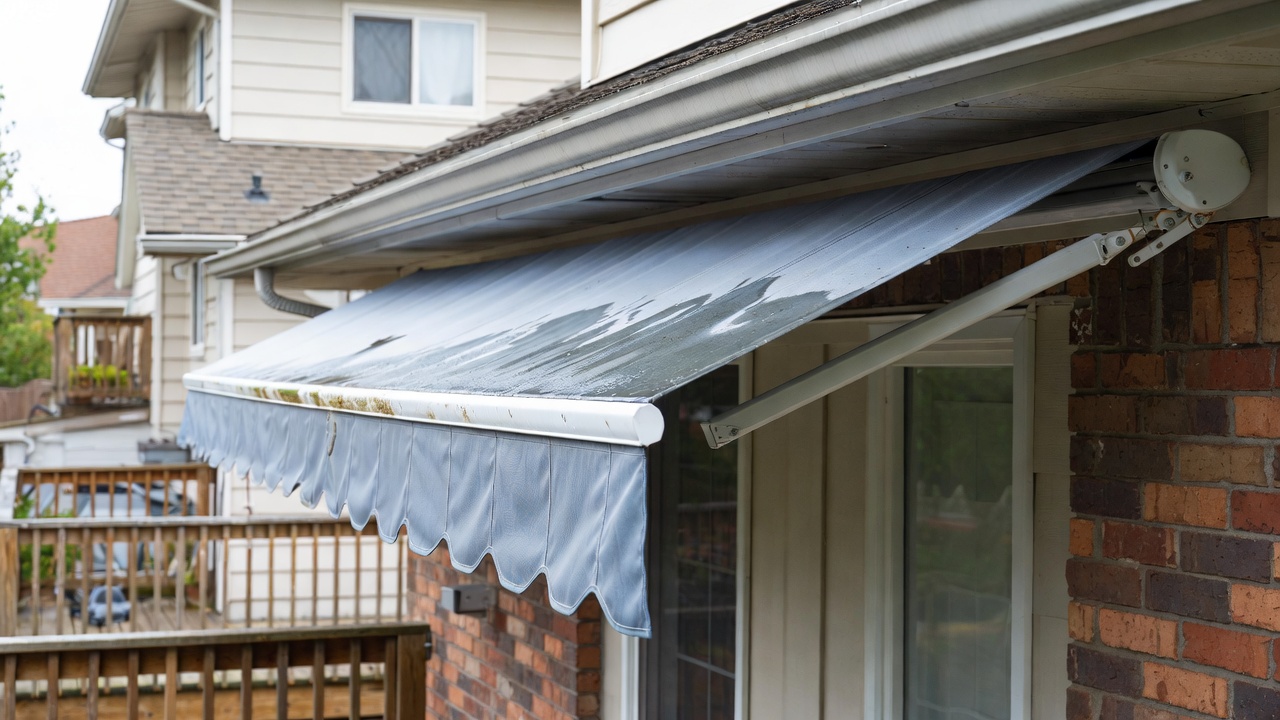
Even with a high wind resistance class and sensors, you still need to use common sense when Environment Canada issues wind warnings for the Okanagan, that’s your cue to retract regardless of what your awning is rated for, because sustained wind is one thing, but wind gusts create sudden forces that exceed rated capacities. Watch for signs your awning might be struggling, like if the fabric canopy starts sagging between the arms (that’s tension loss, possibly from stretching or mounting issues), loose mounting brackets that announce themselves with rattling or movement, or unusual creaking or groaning during moderate wind which means something’s stressed beyond its design limits. Regular maintenance helps tremendously, so check your mounting brackets seasonally (especially after winter), look for any corrosion or loosening, brush off debris that accumulates on the fabric, and keep the extension arm pivot points lubricated these simple steps extend your awning’s wind resistance and overall lifespan.
Making the Right Choice for Your Home
Choosing an awning for Kelowna means balancing several factors, starting with honestly assessing your property’s wind exposure lakeshore properties, hillside locations, and areas with unobstructed northern or western exposures need higher wind ratings, while if you’re in a more sheltered neighborhood setting, you might get away with a Class 1 or 2 awning. Don’t automatically assume the cheapest option saves money because a Class 0 awning that you’re constantly retracting provides less value than a Class 3 that stays extended through typical Kelowna conditions, and you need to factor in the frustration of limited usability and potential replacement costs from wind damage. Professional installation from experienced local installers who understand Kelowna’s climate conditions isn’t optional, it’s essential, because a properly installed Class 2 awning will outperform a poorly installed Class 3 every time, and local installers also understand building codes and can ensure your installation meets requirements for wind load in our area.
Your Outdoor Living Space Deserves Better
Kelowna’s climate practically begs for outdoor living spaces where you can enjoy our gorgeous summers without baking in the sun, and the right awning transforms a patio from somewhere you occasionally visit into an extension of your home but only if you choose an awning that can handle our weather patterns without becoming a liability. Wind resistance matters because your awning should enhance your home, not create anxiety, and with appropriate wind ratings, quality construction, and maybe some smart technology, you’ll spend your time enjoying your outdoor space instead of worrying about the next windstorm, which is the whole point of having an awning in the first place. Understanding how wind ratings affect awning performance helps you make an informed decision that you’ll be happy with for years, so choose wisely, install professionally, and maintain regularly your future self will thank you when you’re relaxing under your awning while your neighbors are inside replacing theirs after the last windstorm.