Aluminum vs Steel Rolling Shutters: Which Is Better for BC Homes?
If you’ve been shopping for rolling shutters, you’ve probably run into the aluminum vs. steel debate. Both materials offer real protection and comfort, but they’re not interchangeable. BC’s climate throws a lot at your home, from scorching Okanagan summers to wet coastal winters, and the material you choose matters more than most people realize. This guide breaks it all down so you can make a confident, informed decision.
What Are Aluminum and Steel Rolling Shutters?
Before comparing them, it helps to understand what each material actually brings to the table.
Aluminum rolling shutters
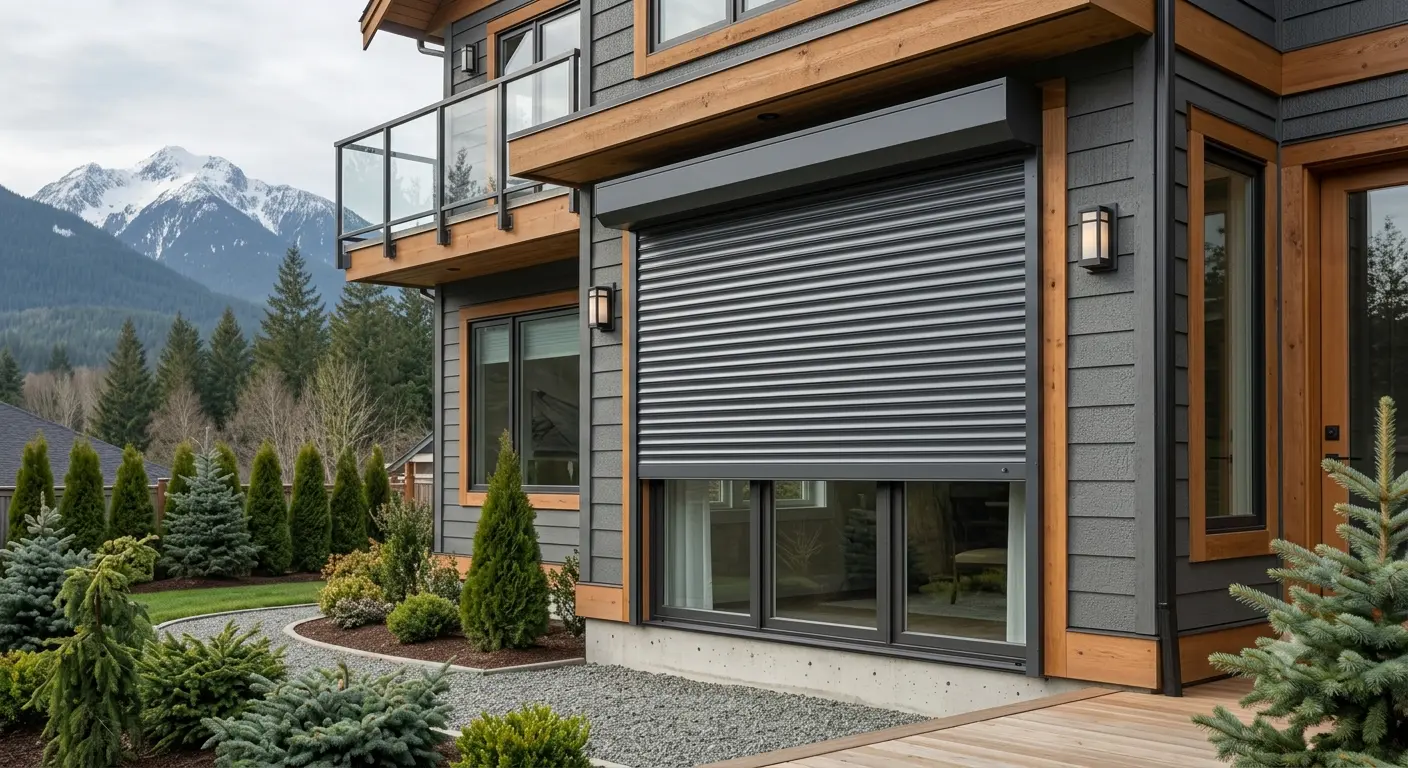
Aluminum roller shutters are built from interlocking horizontal slats, typically hollow or foam-filled, that roll up neatly above your window or door when not in use. They’re the most common choice for residential properties across Canada, and for good reason. Lightweight aluminum shutters are easier to motorize, put less stress on mounting hardware, and they don’t require the heavy structural reinforcement that steel does. For most BC homeowners, aluminum is the default starting point.
Steel rolling shutters
Steel roller shutters use the same interlocking slat design but are manufactured from heavier gauge steel. They’re built for situations where maximum strength is the priority, think commercial storefronts, warehouses, pharmacies, and industrial facilities. Heavy duty steel shutters are noticeably heavier and typically more expensive, but they offer a higher raw strength threshold than aluminum. That said, they’re less common in purely residential settings for a reason.
Both aluminum and steel serve as effective security shutters for homes and businesses across BC, the right choice comes down to your specific application, location, and priorities.
Security and Forced Entry Resistance
Security is usually the first thing people think about when considering roller shutters, and it’s worth understanding the real difference between these two materials.
How resistant are they to break-ins?
Here’s a sobering stat: over 25% of break-ins happen through windows. Rolling shutters regardless of material dramatically reduce that risk simply by being there. Aluminum roller shutters act as a strong physical and psychological deterrent. Most opportunistic burglars move on when they see any significant barrier.
Steel, by its nature, has higher tensile strength than aluminum. A determined intruder with tools would have a harder time breaching a heavy-gauge steel shutter than an aluminum one. That’s the honest truth. But in practice, for residential use, properly installed aluminum shutters are burglary resistant enough for the vast majority of situations homeowners in BC face.
Impact resistance compared
When it comes to impact resistant shutters, the thickness and profile of the slat matters as much as the material itself. Modern aluminum shutters engineered for security applications like the Talius Rollshutter line are designed with forced entry resistance in mind. They’re not the thin aluminum you’d find on a budget screen door. Multi-wall and foam-filled profiles significantly increase rigidity and resistance to forced entry.
Which is better for high-security needs?
If you’re protecting a commercial property, pharmacy, or high-value inventory, high security roller shutters made from steel make a strong case. The raw strength advantage is real in those contexts. For residential homes, a quality aluminum shutter installed correctly provides excellent protection and far surpasses what most homes have in place. The gap between the two materials narrows considerably once you factor in proper installation and slat profile
Weather Resistance and BC Climate Performance
This is where aluminum pulls significantly ahead for most BC homeowners and it’s not even a particularly close contest.
Corrosion and rust resistance
Aluminum doesn’t rust. That’s not a marketing claim, it’s basic materials science. When exposed to moisture, aluminum forms a thin oxide layer that actually protects the metal underneath. Steel, on the other hand, will rust if its protective coating is scratched, chipped, or worn down over time.
For anyone living on BC’s coast Metro Vancouver, the Sunshine Coast, Vancouver Island this matters enormously. Salt air accelerates corrosion on steel surfaces faster than most people expect. Corrosion resistant shutters made from aluminum simply don’t have this vulnerability. If low maintenance and long-term durability in a wet environment are priorities, rust proof roller shutters made from aluminum are the smarter call.
Performance across BC’s climate zones
BC isn’t one climate, it’s several. In the Okanagan, you’re dealing with intense UV exposure and summer temperatures that regularly push past 35°C. In the BC Interior, freeze/thaw cycles put constant stress on materials through winter. On the coast, persistent rain and humidity are the main concerns.
Aluminum handles all of these well. It doesn’t expand and contract dramatically with temperature swings, it won’t degrade under UV exposure the way some coatings do, and it sheds water without absorbing it. Weather resistant shutters made from aluminum are genuinely well-suited to BC climate home protection across every region.
Steel performs adequately in dry inland climates as long as the coating stays intact, but it requires more vigilance in harsher environments.
Wind and debris resistance
During wildfire season across the BC Interior, flying debris becomes a real concern. Both materials offer meaningful protection here, but a well-engineered aluminum shutter with a solid slat profile handles high-wind conditions effectively. The key isn’t just the material, it’s the quality of the guides, bottom bar, and overall system. A cheap shutter in either material won’t protect you the way a quality installation will.
Insulation, Energy Efficiency, and Noise Reduction
Rolling shutters do a lot more than keep intruders out. For many BC homeowners, the energy and comfort benefits are equally compelling.
Thermal insulation
Insulated roller shutters particularly those with foam-filled aluminum slats create a genuine barrier between your window and the outside environment. That extra layer traps air and significantly reduces heat transfer in both directions. In the winter, they help keep warmth inside. In the summer, they block heat before it ever reaches the glass.
This isn’t new news, the Canadian government recognized the energy-saving potential of rollshutters back in 2009 and offered tax incentives to households that installed them. Thermal insulation shutters made from foam-filled aluminum remain one of the most cost-effective ways to improve a window’s thermal performance without replacing the window itself.
Steel shutters can also be insulated, but the material itself conducts heat more readily than aluminum, which slightly reduces the overall insulation efficiency.
Heat reduction in summer
For Okanagan homeowners especially, energy efficient window shutters aren’t a luxury, they’re practical. Rolling shutters can block significant solar heat gain before it reaches your glass, reducing the load on your air conditioning and keeping interior temperatures comfortable without cranking the AC all day. Heat reduction window shutters are one of the most underrated home upgrades you can make in a climate like Kelowna’s.
Noise reduction
Both materials offer noise reduction shutters benefits, but there are differences worth noting. Steel’s greater mass does absorb more sound in raw terms. However, engineered aluminum profiles especially multi-wall or foam-filled designs, close that gap considerably. If you’re near a busy road, a commercial area, or a highway, either material will noticeably reduce ambient noise compared to having nothing on your windows.
Durability, Maintenance, and Lifespan
Nobody wants to install something and have to constantly maintain or replace it. Here’s the honest breakdown.
How long do rolling shutters last?
Roller shutter lifespan depends heavily on installation quality, usage frequency, and the environment they’re in. In general:
- Quality aluminum roller shutters in BC conditions last 20–25+ years with minimal intervention
- Steel roller shutters in dry inland climates can match that lifespan, but in coastal or humid environments, their longevity drops significantly without regular maintenance
Shutter durability comparison between the two really comes down to the environment. In most BC locations, aluminum simply holds up better over the long haul.
Maintenance requirements
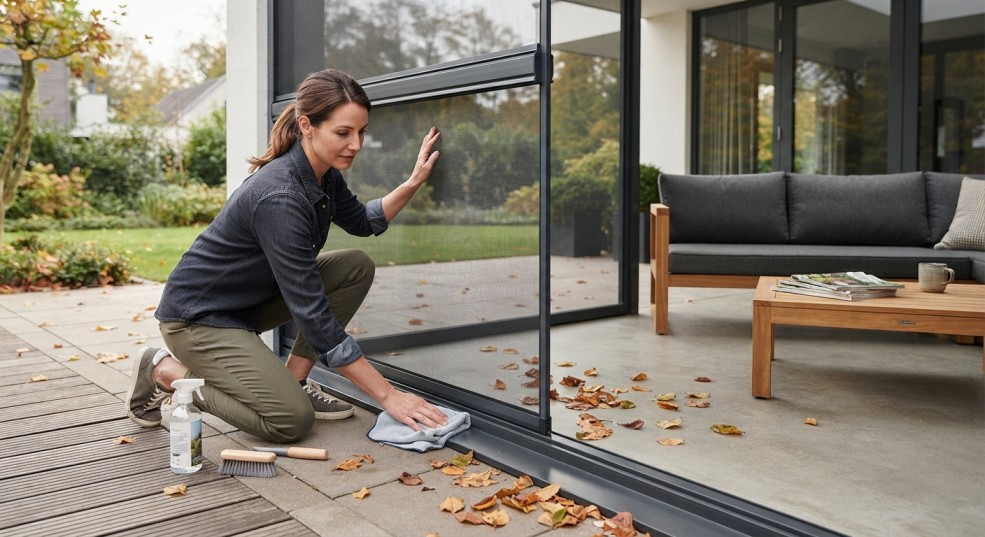
This is one of aluminum’s clearest advantages. Maintenance requirements for aluminum shutters are minimal: an occasional wipe-down to remove dirt and debris, lubrication of the guides once a year, and a visual check of the bottom bar and motor (if motorized). That’s about it.
Steel shutters need more attention. You’ll want to periodically inspect the protective coating for chips or scratches and address any bare metal before rust takes hold. In coastal environments especially, that inspection schedule needs to be consistent. Over a 20-year period, the cumulative maintenance time and cost for steel shutters in BC conditions can be substantial.
Long-term cost comparison
Steel shutters often have a higher upfront cost for residential applications, and when you layer in the additional maintenance requirements over time particularly in BC’s varied climates aluminum typically wins on total cost of ownership. The shutter durability comparison isn’t just about which material is tougher in a lab setting; it’s about which one performs reliably with the least ongoing effort in real-world BC conditions.
Aluminum vs Steel Rolling Shutters – Side-by-Side Summary
|
Feature |
Aluminum |
Steel |
|
Security |
Strong – excellent deterrent |
Stronger raw strength |
|
Corrosion resistance |
Excellent – naturally rust-proof |
Requires coating maintenance |
|
Weight |
Lightweight |
Heavy |
|
Thermal insulation |
Very good (foam-fill options) |
Good (conducts heat more) |
|
Maintenance |
Minimal |
Moderate to high |
|
Lifespan in BC |
20–25+ years |
Variable – climate dependent |
|
Best suited for |
Residential, coastal, energy-focused |
Commercial, high-security, dry inland |
For most BC homeowners, aluminum is the clear practical choice. It handles the climate, requires less upkeep, performs well on security, and delivers strong energy efficiency. Steel makes sense in specific commercial or high-security scenarios, but for a home in Kelowna, Vernon, Penticton, or anywhere along the coast, aluminum wins on almost every measure that matters day-to-day.
Which Rolling Shutter Material Is Right for Your BC Home?
Choose aluminum if…
- You’re protecting a residential property
- You live in a coastal, humid, or high-rainfall area of BC
- Energy efficiency and heat reduction are priorities
- You want a low-maintenance solution that looks after itself
- You’re interested in lightweight aluminum shutters that are easy to motorize
Choose steel if…
- You’re protecting a commercial property or industrial facility
- Forced entry resistance shutters at the highest level are required
- Your property is in a dry inland climate with lower corrosion risk
- You need heavy duty steel shutters for large commercial openings
At Shutters and Shade, we install Talius Rollshutters, a premium aluminum rolling shutter system built specifically for Canadian conditions. For the vast majority of Okanagan and BC Interior homeowners, they hit the sweet spot of security, durability, energy efficiency, and low maintenance perfectly.
Frequently Asked Questions
Are aluminum rolling shutters strong enough to stop a break-in?
Yes, for residential applications, aluminum roller shutters provide strong burglary resistant protection. Quality aluminum shutters with reinforced slat profiles are designed with forced entry resistance in mind, and studies consistently show that physical barriers like shutters significantly deter opportunistic intruders.
Do steel shutters rust in BC’s wet climate?
They can. Steel shutters rely on a protective coating to prevent rust, and once that coating is compromised, through scratching, impact, or wear, corrosion can develop. In BC’s coastal and high-rainfall areas, rust proof roller shutters made from aluminum are a much lower-risk choice.
Which shutter material performs better in the Okanagan heat?
Aluminum, particularly with foam-filled insulated slats, performs exceptionally well in Okanagan summers. Heat reduction window shutters made from aluminum block solar gain effectively, reducing indoor temperatures and lowering AC costs, a significant advantage for BC climate home protection.
How long do aluminum roller shutters last?
With proper installation and minimal maintenance, quality aluminum roller shutters have a roller shutter lifespan of 20–25 years or more in BC conditions. Steel shutters can match this in dry climates, but aluminum holds up more consistently across BC’s varied environments.
Can rolling shutters help reduce my energy bills?
Absolutely. Energy efficient window shutters, especially insulated roller shutters with foam-filled slats , reduce heat transfer through your windows in both summer and winter. Many homeowners see meaningful reductions in cooling and heating costs after installation.
What’s the difference between aluminum and steel roller shutters?
The aluminum vs steel shutters comparison comes down to weight, corrosion resistance, and application. Aluminum is lighter, naturally rust-proof, and better suited to most residential and coastal settings. Steel offers higher raw strength and suits commercial or industrial high-security applications. For most BC homes, aluminum is the right roller shutter materials comparison winner.
Bottom Line
Choosing between aluminum and steel rolling shutters isn’t complicated once you understand what each material is built for. For most BC homeowners, whether you’re in the Okanagan, the Interior, or along the coast, aluminum is the practical, durable, and cost-effective answer. It handles BC’s climate without complaint, keeps maintenance light, and delivers real security and energy savings. Ready to find the right fit for your home? Shutters and Shade offers free, no-obligation consultations across the Okanagan.