Manual vs Motorized Retractable Screens: Pros and Cons
Choosing between manual and motorized retractable screens is one of those decisions that seems straightforward until you start looking at the details. Both systems do the same core job sun protection, privacy, insect control, weather defence but they suit different homes, different openings, and different lifestyles. Get it right and you’ll use your screens every single day. Get it wrong and they become something you occasionally remember exists. Here’s the honest breakdown.
Understanding the Two Systems
Before diving into pros and cons, it helps to understand what each system actually is because the difference goes beyond just having a motor or not.
How manual retractable screens work
Manual retractable screens operate by hand. Depending on the design, you pull a strap, turn a crank, or push a bar to deploy and retract the screen. The mechanism is straightforward: a spring-loaded or tensioned roller holds the fabric, and you control it directly. Manual screen doors and window screens in this category work well for standard-sized openings and situations where you’re not deploying and retracting multiple times a day. Retractable screen installation for manual systems is also generally simpler, no wiring, no motor housing to account for, fewer structural requirements.
How motorized retractable screens work
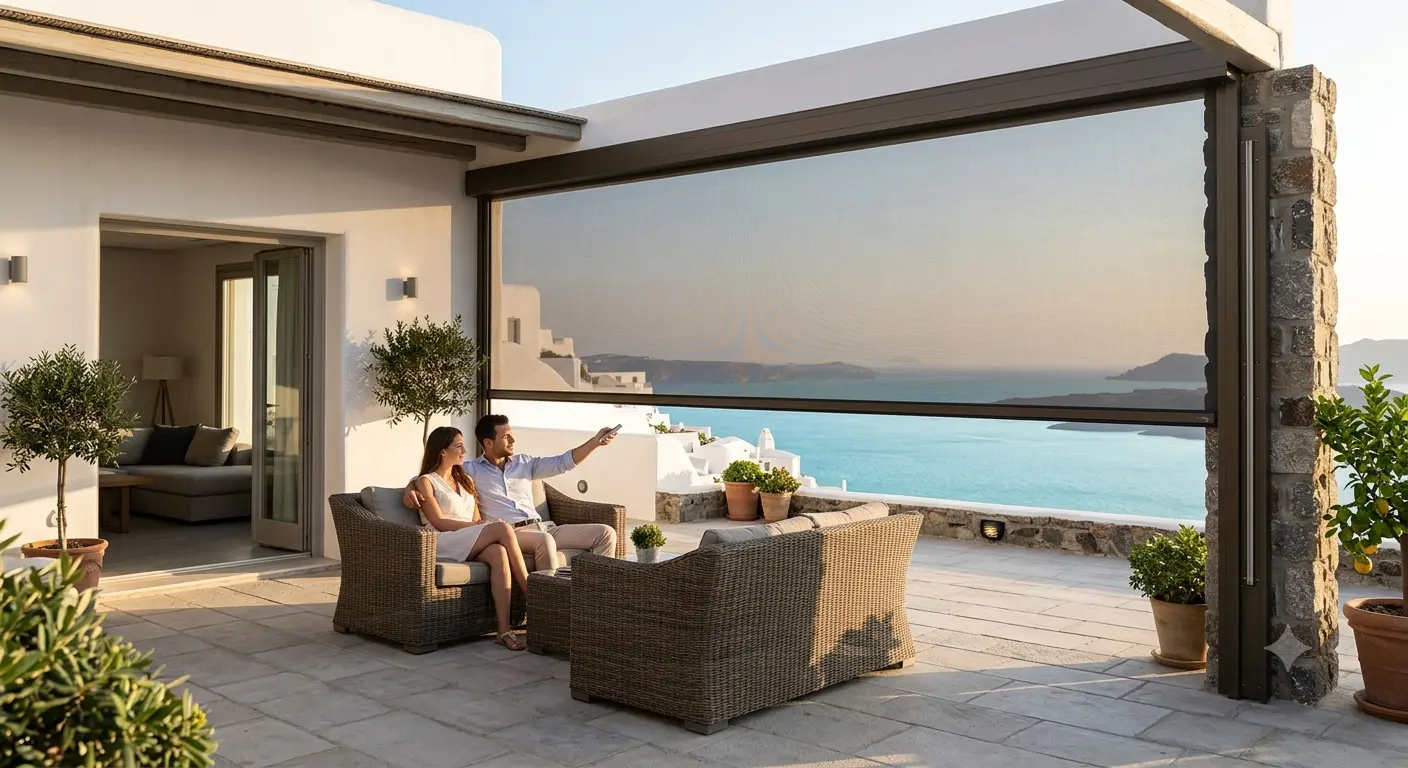
Motorized retractable screens replace the manual operation with an electric motor. You operate them with a remote control, a wall-mounted switch, or through an app on your phone. Some systems integrate with wind sensors that trigger automatic retraction when conditions get rough. Electric retractable screens handle large spans cleanly, something that becomes genuinely difficult with manual operation once you get past a certain width. Automated screen systems also deploy consistently every time, with no uneven tension or partial deployment. For outdoor motorized screens on wide patio openings or elevated balconies, the motor isn’t just a convenience it’s often a practical necessity.
Where each system fits in a modern home
As a general rule, manual suits simpler, lower-traffic applications. Motorized suits large openings, frequently used spaces, and homes where smart home integration is part of the picture. Modern home shading systems increasingly include motorized screens as a standard feature and residential screen automation is becoming more accessible as the technology matures. The retractable screen systems comparison really comes down to how, where, and how often you’ll use them.
Manual Retractable Screens – Pros and Cons
Pros of manual screens
The biggest advantage of manual retractable screens is cost. They’re the more accessible entry point for most homeowners, and for the right application, they’re genuinely all you need. A straightforward patio side panel or a single window screen doesn’t need a motor, it just needs to work reliably when you pull it down.
The simplicity of the mechanism is also an advantage. Fewer components means fewer things that can wear out or need attention. Maintenance of manual screens typically amounts to keeping the tracks clean, lubricating the guides once a year, and occasionally checking the tension on the spring or strap. That’s a low bar. Manual screen doors also don’t need power, they work during outages, require no wiring, and can be installed in locations where running electricity isn’t practical.
From a cost comparison retractable screens standpoint, manual systems are the clear winner upfront. For homeowners with smaller openings or seasonal use patterns, that lower initial investment makes a lot of sense.
Cons of manual screens
The convenience gap becomes obvious quickly with larger or more frequently used openings. Manually deploying and retracting a wide screen several times a day gets old fast and in practice, screens that are inconvenient to use often just stay in one position rather than being adjusted as conditions change. That defeats a lot of the purpose.
Manual systems also aren’t practical for high or hard-to-reach installations. A screen on a second-floor window or an elevated deck railing isn’t something you want to be manually operating on a step stool. And there’s no getting around the fact that manual vs motorized screens comparison lands firmly in motorized’s favour when it comes to smart home compatibility, manual screens simply can’t integrate with automated systems, timers, or sensors.
Over time, strap and spring mechanisms can lose tension with heavy use. It’s not a dealbreaker, but it’s worth factoring in for high-frequency applications.
Motorized Retractable Screens – Pros and Cons
Pros of motorized screens
The most underrated benefit of motorized retractable screens is that you actually use them. One-touch operation removes every bit of friction from the process you don’t think about it, you just press a button. That matters more than it sounds, because a screen that gets deployed consistently delivers consistent sun protection, privacy, and energy savings. One that stays retracted because it’s inconvenient to pull down doesn’t.
Remote controlled screens handle large spans without effort. Wide patio openings, bi-fold door systems, oversized windows these are applications where manual operation becomes genuinely impractical. Screen door automation also means you can set schedules: screens down at noon when the sun hits the west face of your house, up again by 6pm. Smart home retractable screens that connect to home automation platforms take this further, letting you manage screens alongside lighting, HVAC, and other systems from a single interface.
Motorized systems also deploy with consistent, even tension every time. No sagging, no partial deployment, no wrestling with a strap on a windy day.
Cons of motorized screens
The upfront cost is the obvious one. Electric retractable screens cost more than manual systems the motor, controls, and more complex retractable screen installation all contribute to a higher initial investment. For smaller or occasionally used openings, that premium is hard to justify.
Installation requires access to power, which adds both complexity and cost depending on where the screen is going. It’s not a barrier, but it does mean motorized screen installation is best handled by experienced installers rather than treated as a weekend DIY project.
Motor components do add a long-term maintenance consideration. Quality motors in good motorized screen systems are built to last, but they are an additional component compared to a manual spring mechanism. Most quality systems include a manual override for power outages, which addresses the most common concern but it’s worth asking about when you’re comparing options. Durability of motorized screens is generally very good from reputable manufacturers, but as with any powered system, installation quality matters enormously.
Performance Comparison – What Really Matters Day to Day
Sun and UV protection
Here’s something worth knowing: both systems use the same fabric range, so sun protection retractable screens performance is equal when the screen is actually deployed. The difference is behavioural motorized screens get used more consistently, which means better real-world UV protection over time. A manual screen that stays retracted because it’s inconvenient provides exactly zero protection.
Wind and weather resistance
Wind resistant retractable screens in both categories use weighted bottom bars and tensioned side guides to stay stable in moderate wind. The meaningful difference is that motorized systems can incorporate wind sensors that automatically retract the screen before conditions cause damage. Weather resistant screen systems with this feature are genuinely worth considering in exposed locations Okanagan valley winds and coastal gusts can come up quickly, and an auto-retract sensor is cheap insurance against a damaged screen.
Privacy and outdoor comfort
For privacy screen solutions, fabric choice matters more than the drive mechanism. A denser weave gives you stronger privacy whether the screen is manual or motorized. That said, motorized screens make adjusting throughout the day far more practical, pulling partial coverage, going fully closed for an evening, opening back up in the morning. Patio screen systems and retractable patio enclosures with motorized operation tend to get used more creatively as a result.
Energy efficiency
Both systems contribute to heat reduction and cooling cost savings when deployed, but energy efficient screen systems only work when they’re actually in use. Motorized screens with scheduling capability mean your screens are down during peak heat hours whether you remember to deploy them or not. Over a BC summer, that consistent use adds up in real energy savings.
Installation – What Each System Requires
Manual screen installation
Manual retractable screen installation is structurally straightforward. No wiring, no motor housing, simpler brackets. Installation is faster and can be handled by a wider range of contractors. For standard residential applications, a single patio panel, a window, a side deck screen manual installation is clean and uncomplicated.
Motorized screen installation
Motorized installation needs power access most quality systems are hardwired, though battery-motor options exist for locations where running cable isn’t practical. The motor housing is larger than a manual roller, which needs to be factored into the design, particularly in tight soffits or under beams. Outdoor motorized screens in exposed locations also need weatherproof wiring and appropriate housing. Residential screen automation installations are best handled by installers with specific experience — the difference between a clean, professional result and a compromised one often comes down to installation quality.
Cost Comparison – Manual vs Motorized
Upfront costs
Manual screens are the more budget-friendly starting point. For homeowners where cost is the primary consideration, or for applications where manual operation is genuinely practical, the lower entry price makes sense. Motorized screens carry a higher upfront cost that reflects the motor, controls, and installation complexity, it’s a real difference, and it’s worth being honest about.
Long-term value
The cost comparison retractable screens picture changes when you look at total value over time. Manual systems have lower maintenance costs and fewer components to replace. Motorized systems, used daily in the right application, deliver consistent utility that can justify the premium over several seasons. Both add genuine value to the home. A well-chosen retractable screen systems comparison between the two should account for how you’ll actually use the space, not just the sticker price.
Which System Is Right for Your Home?
Choose manual if
- The opening is standard-sized a single door, a window, a narrow patio panel
- Budget is the primary driver
- You’ll use the screen seasonally rather than daily
- You want simple installation without electrical work
- Manual retractable screens and manual screen doors suit the application cleanly
Choose motorized if
- The opening is large a wide patio span, bi-fold doors, an oversized window
- You’ll use it daily and want genuine convenience
- Smart home integration matters to you
- The installation is elevated or hard to reach a balcony, a high window, an elevated deck
- Remote controlled screens and smart home retractable screens fit your lifestyle and home setup
- Residential screen automation is already part of how your home runs
At Shutters and Shade, we install both systems and will give you an honest recommendation based on your specific opening, location, and how you live in the space, not based on which option costs more.
Frequently Asked Questions
What is the main difference between manual and motorized retractable screens?
Manual retractable screens are operated by hand via strap, crank, or pull-bar. Motorized retractable screens use an electric motor controlled by remote, wall switch, or app. The retractable screen systems comparison comes down to convenience, opening size, and how frequently you’ll use them.
Are motorized retractable screens worth the extra cost?
For large openings and daily use, yes, the convenience drives consistent deployment, which delivers real sun protection, privacy, and energy savings over time. For smaller or occasionally used openings, manual screens offer strong value at a lower cost comparison retractable screens price point.
Can motorized screens be integrated with a smart home system?
Yes. Smart home retractable screens from quality manufacturers connect to platforms like Google Home, Amazon Alexa, and dedicated home automation systems. Screen door automation can include scheduling, voice control, and wind-sensor-triggered auto-retract.
How long do manual retractable screens last?
With basic maintenance of manual screens clean tracks, lubricated guides, annual tension check, quality manual retractable screens last many years reliably. Heavy daily use on larger openings will wear components faster than occasional seasonal use.
Do motorized screens work during a power outage? Most quality electric retractable screens and motorized screen doors include a manual override that allows operation without power. It’s worth confirming this feature when comparing systems, it’s standard on reputable products but not universal.
Which screen system is better for wind and weather protection?
Both offer solid wind resistant retractable screens performance in moderate conditions. Motorized systems with wind sensors have a practical edge automatic retraction protects the screen before conditions cause damage. Weather resistant screen systems with this feature are worth considering in exposed locations.
Can retractable screens be installed on large patio or deck openings?
Yes, patio screen systems and retractable patio enclosures are available in widths that handle most residential spans. For very large openings, multiple screens on a shared track, or long spans, motorized retractable screen installation is typically the better approach.
Bottom Line
Manual and motorized retractable screens are both genuinely good products, the right choice just depends on where they’re going and how you’ll use them. For a straightforward single opening, manual delivers solid performance without the added cost. For large spans, daily use, or smart home integration, motorized earns its premium quickly. If you’re not sure which direction makes sense for your space, Shutters and Shade offers free consultations across the Okanagan, we’ll take a look and give you a straight answer.