Are Retractable Screens Pet-Friendly? What Homeowners Should Know
If you share your home with a dog or cat, choosing the right screen door involves more than keeping bugs outside. You also need to consider scratching, pushing, climbing, and the possibility of a pet slipping through an opening. The good news is that pet-friendly retractable screens can work well in many homes when the right mesh, frame, and installation are selected for your pet’s habits.
Are Retractable Screens Safe for Dogs and Cats?
Yes, retractable screens can be a practical option for homes with pets. However, not every screen is designed to handle the same level of wear and tear. A standard insect screen may be perfectly adequate for a calm indoor cat but may not hold up as well against a large dog that repeatedly pushes against the door.
The key is to look at the entire screen system rather than focusing only on the mesh. The material, frame, locking system, installation, and size of the opening all contribute to how well the screen performs.
For homeowners looking for dog-friendly screen doors or cat-friendly screen doors, it is also important to understand how their pet behaves. Dogs may run into a screen because they are excited to get outside, while cats are more likely to scratch, climb, or investigate gaps around the edges.
In other words, “pet-friendly” does not necessarily mean indestructible. It means the screen has been selected and installed with normal pet use in mind.
What Makes a Retractable Screen Pet-Friendly?
Several features can make a retractable screen better suited to a home with pets. One of the most important is the type of mesh used.
Pet-Resistant Screen Mesh
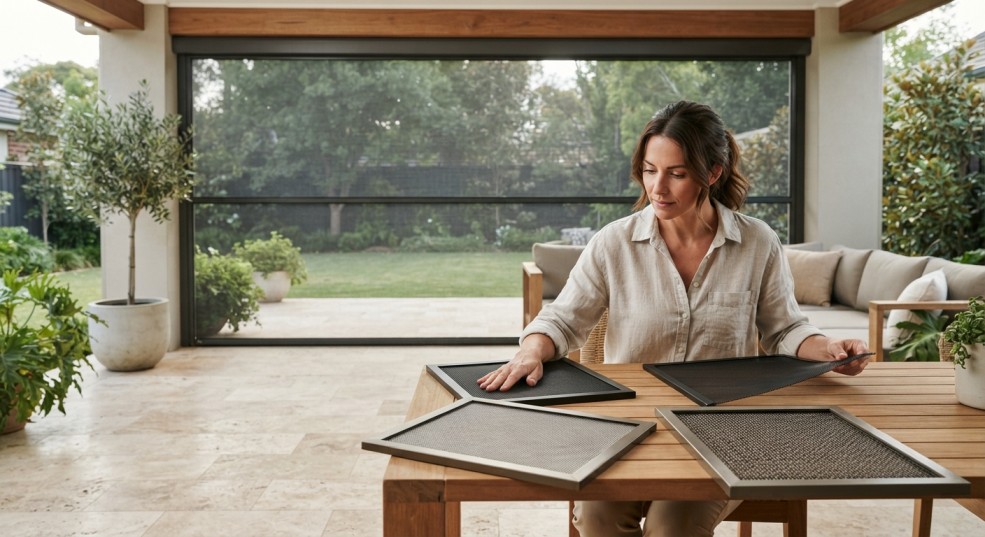
Pet-resistant screen mesh is designed to provide greater durability than conventional insect screening. It can be particularly useful in areas where pets regularly pass through or spend time near the screen.
A good pet mesh should be able to withstand everyday contact from paws and claws without sacrificing the basic benefits homeowners expect from a screen, such as airflow and visibility.
Still, pet-resistant does not mean completely pet-proof. A determined dog or cat can eventually damage almost any screening material if it repeatedly scratches, bites, or pushes against it.
Scratch-Resistant and Tear-Resistant Materials
Cats can be surprisingly hard on screens. Their claws can catch ordinary mesh and gradually create holes. Dogs may cause damage by jumping against the screen or trying to push through it.
That is why scratch-resistant mesh and a tear-resistant screen can be worth considering for households with active pets. These materials are intended to provide additional resistance to the everyday abuse that screens can receive in busy homes.
The right durable screen material depends on the application. A frequently used patio opening may have different requirements from a rarely used window or doorway.
Which Screen Mesh Is Best for Homes With Pets?
There is no single material that is automatically best for every dog, cat, door, or home. Instead, homeowners should consider their pet’s size and behaviour, how often the opening is used, and how much durability is required.
Fiberglass Screen
Fiberglass screen is commonly used for insect screening because it is lightweight, flexible, and provides good visibility and airflow. It can be a suitable choice for many applications, particularly where pets are unlikely to put significant pressure on the screen.
However, if your dog routinely charges toward the door or your cat likes to climb and claw at screens, a more pet-resistant option may be appropriate.
Vinyl-Coated Screen
A vinyl-coated screen can provide additional durability for certain applications. Its suitability depends on the specific product and how the screen will be used.
For pet owners, the important point is to select a screening material based on actual conditions rather than simply choosing the strongest-sounding option.
Stainless Steel Mesh
Stainless steel mesh is another option when increased strength is a priority. It can provide excellent durability, although factors such as appearance, flexibility, cost, and compatibility with the retractable screen system should also be considered.
Pet-Specific Mesh Options
Homeowners may also encounter products such as Phifer PetScreen or TuffScreen when researching pet-resistant screening. These are examples of specialized screening products developed for applications where increased durability is desirable.
The best choice for your home depends on the specific screen system, opening, and your pet’s behaviour. A professional can help determine which material makes sense rather than assuming one material will work equally well in every situation.
Can Retractable Screens Prevent Pets From Escaping?
A properly installed retractable screen can help create a useful barrier, but homeowners should not treat it as a guaranteed pet-containment system.
Escape prevention depends on more than the mesh itself. If a screen does not close properly, has gaps around the edges, or is not securely latched, a curious or determined pet may find a way through.
The pet’s behaviour matters, too. A relaxed dog that simply enjoys sitting near an open patio door presents a very different challenge from a dog that routinely pushes through barriers.
Secure Locking Mechanisms
Secure locking mechanisms can help keep a retractable screen in its intended position. This is particularly useful for doors that are opened and closed frequently throughout the day.
Some systems may incorporate a mesh lock or other mechanism designed to secure the screen when it is extended. The exact design varies between products, so homeowners should understand how the system operates before choosing one for a pet-heavy household.
Reinforced Frames and Installation
The frame is another part of the equation. Reinforced frames and properly fitted components can provide greater stability when a screen is subjected to regular use.
Accurate installation is equally important. A high-quality screen can still perform poorly if it is incorrectly measured or installed. For that reason, professional installation and a properly fitted system can be especially valuable around large door openings.
Are Retractable Screens Good for Patio and Sliding Doors?
Retractable screens can be particularly useful around patio doors and sliding patio doors, where homeowners want the flexibility to open their home to the outdoors without leaving the doorway completely exposed.
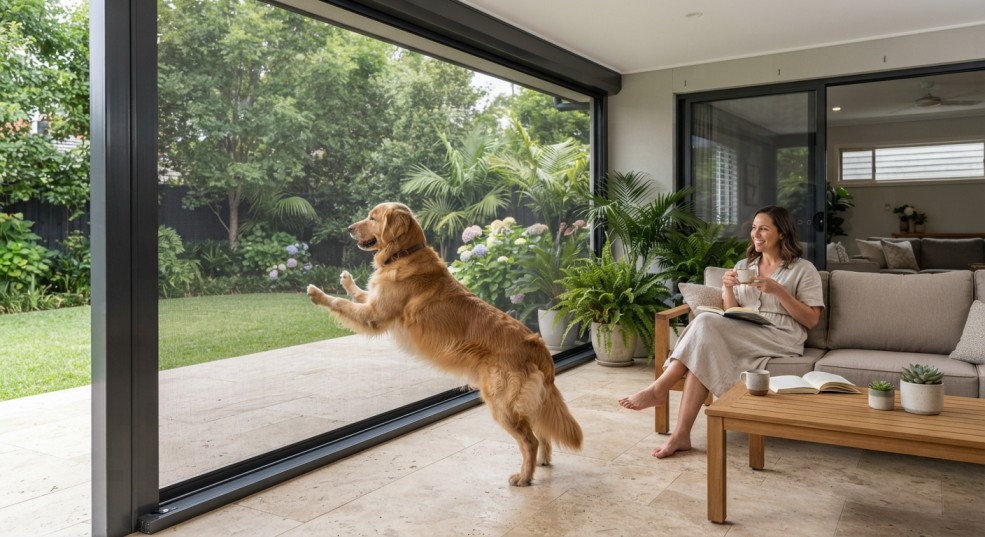
For pet owners, this can make everyday life more convenient. Your dog can enjoy the sights and smells of the backyard while the screen helps keep insects outside. You can also bring more natural airflow into the home without permanently blocking the doorway.
This supports a more comfortable form of indoor-outdoor living, especially during pleasant weather.
Retractable designs have another advantage: when the screen is not needed, it can be moved out of the way. That makes them useful for homeowners who do not want a permanent screen occupying the opening.
How to Choose the Right Retractable Screen for Your Pet
Start with your pet rather than the product brochure.
Consider whether your dog is likely to jump or run into the screen. If you have a cat, think about whether it scratches, climbs, or attempts to squeeze through small openings. These habits will help determine whether standard screening is sufficient or whether pet-resistant mesh is a better choice.
Next, look at the location. A screen installed on a heavily used patio door will generally experience more activity than one covering a rarely used entrance. Large openings may also require different considerations regarding frame strength and installation.
Finally, pay attention to fit. Custom-fit retractable screens are designed around the dimensions of the opening rather than relying on a generic size. A proper fit can help minimize unwanted gaps and ensure that the screen operates as intended.
Are Pet-Proof Screen Doors Really Pet-Proof?
The term pet-proof screen doors can be misleading. No screen should be considered completely immune to damage from a determined animal.
Even a strong pet-resistant screen can eventually be damaged by persistent scratching, chewing, or repeated impact. That’s why it is better to think in terms of resistance and suitability rather than expecting a screen to withstand anything a pet can do.
Pet safety should remain the priority. If your animal has a history of breaking through barriers or aggressively attacking screens, talk with a professional about whether a retractable screen is appropriate for your situation.
How to Help Your Pet Adjust to a Retractable Screen
Pets do not always recognize a new screen as a barrier. A dog may run toward it because the yard is visible, while a cat may investigate the mesh simply because it is something new.
Introduce the screen gradually and supervise your pet during the first few days. Encourage calm behaviour around the doorway rather than allowing your pet to repeatedly push against the mesh.
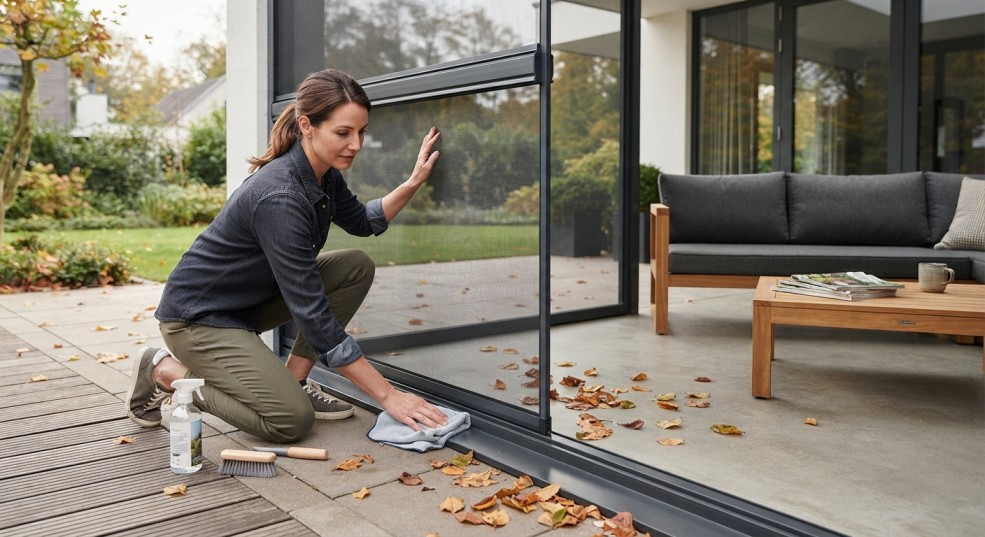
It is also worth checking the screen periodically. Look for tears, loose components, damaged edges, or anything that could create an opening. Addressing minor damage early can help prevent a larger problem later.
Benefits of Pet-Friendly Retractable Screens for Homeowners
The biggest advantage is that you do not necessarily have to choose between your pet’s access to the outdoors and a comfortable home environment.
A well-selected retractable screen can provide fresh air and ventilation while helping keep flying insects outside. It can also make patios, decks, and other outdoor spaces easier to enjoy with your pets.
For households that spend a lot of time entertaining outdoors, the combination of easy access, visibility, and a retractable design can make the transition between indoor and outdoor spaces much more convenient.
And because the screen can retract when it is not required, homeowners can maintain an unobstructed opening when desired.
When a Retractable Screen May Not Be the Best Choice for Your Pet
Retractable screens are not necessarily appropriate for every animal.
If your pet repeatedly chews through mesh, aggressively charges barriers, or cannot safely be left around a screen without supervision, another type of containment solution may be more suitable.
It is also important to distinguish between pet safety and pet containment. A screen can be designed to resist normal pet interaction without being intended to serve as a heavy-duty security barrier.
If you are unsure, discuss your pet’s habits and the intended opening with a professional before making a decision.
Pet-Friendly Retractable Screens: What Homeowners Should Remember
Retractable screens can be an excellent addition to a pet-friendly home, but choosing the right system matters. Look beyond the word “pet-friendly” and consider mesh strength, frame construction, locking mechanisms, installation, and your pet’s individual behaviour.
For homeowners in the Okanagan and BC Interior, Shutters and Shade provides custom exterior shading solutions, including retractable screens designed around individual openings. A professional assessment can help determine the right approach for your home, your doors, and the way your pets use the space.
FAQs About Pet-Friendly Retractable Screens
Can dogs damage retractable screens?
Yes. Dogs can damage screens by scratching, chewing, jumping against them, or running into them. A pet-resistant mesh can offer greater durability, but no screening material should be considered completely indestructible.
Are retractable screens safe for cats?
They can be, provided the screen is appropriate for the cat and installed correctly. Cats that scratch, climb, or attempt to escape may require a more durable screening material and careful attention to gaps and locking mechanisms.
What is pet-resistant screen mesh?
Pet-resistant screen mesh is screening designed to withstand more wear and tear than standard insect mesh. It can be useful for homes where pets regularly interact with doors or screens.
Is a fiberglass screen strong enough for pets?
It depends on the pet and the application. Fiberglass screens can work well in many homes, but pets that scratch, chew, or repeatedly impact the screen may require a more durable option.
Is stainless steel mesh better for pets?
Stainless steel mesh can provide excellent durability, but “better” depends on the application. Homeowners should also consider flexibility, appearance, cost, and compatibility with the retractable system.
Can a retractable screen stop a pet from escaping?
A properly fitted and secured screen can help prevent escapes, but it should not be considered a guaranteed pet-containment system. Your pet’s behaviour, the mesh, frame, locks, and installation all matter.
Are retractable patio screens good for homes with pets?
They can be a convenient option for pet owners who want easier access to outdoor areas while maintaining ventilation and insect protection. The appropriate screen depends on the pet and the size and configuration of the patio opening.
Can retractable screens be custom-fitted?
Yes, many retractable screen systems can be made to suit specific door and window dimensions. Custom-fit retractable screens can help ensure proper operation and reduce unwanted gaps around the opening.