Common Shade Problems Okanagan Homeowners Face
If you’ve lived through even one Okanagan summer, you already know the drill. The sun doesn’t ease in gently, it shows up strong and sticks around for months. That intense summer sun is part of why people love this region, but it also creates a handful of predictable headaches for homeowners. Here’s a look at the most common shade problems locals run into, and where they usually come from.
Problem #1: Heat Buildup on Patios and Decks
Why West-Facing Patios Struggle Most
If your patio faces west, you’ve probably noticed it becomes almost unbearable by late afternoon. That’s not a coincidence. West-facing patios catch the sun at its most intense angle, right when temperatures are already peaking for the day. Solar heat gain builds steadily from midday onward, and by the time most people want to sit outside and relax, the space has absorbed hours of direct sun.
The Result: Unusable Outdoor Living Spaces
The practical outcome is simple: expensive outdoor living spaces sit empty. You paid for the patio furniture, maybe even a fire pit or outdoor kitchen, but if the space is too hot to use for half the day, none of that gets put to use. It’s a common source of frustration, and it chips away at overall outdoor comfort and home comfort more broadly.
Problem #2: Overheated Interiors from South-Facing Windows
It’s not just the outside of the house that takes a hit. South-facing windows let in a steady stream of sunlight throughout the day, and in a lot of Okanagan homes, that means interior rooms heat up fast. Basic window coverings, blinds, curtains, that sort of thing, can help a little, but they’re working after the fact. By the time sunlight hits the glass, most of the heat has already made its way in.
This is where a lot of homeowners start noticing their cooling costs creeping up. Air conditioning has to work harder to offset heat that basic interior coverings never really stopped in the first place.
Problem #3: UV Exposure and Fading Outdoor Furniture
Here’s one that catches a lot of people off guard. UV exposure doesn’t just affect skin, it does a number on outdoor furniture too. Cushions fade, fabric weakens, and plastic or resin pieces can start looking chalky and worn within a single season if they’re left in direct sun day after day.
Most homeowners don’t realize how fast this happens until they’re replacing cushions or refinishing furniture they bought just a year or two earlier. It usually comes down to one root issue: not enough shade coverage over the areas where furniture actually sits.
Problem #4: Glare Making Outdoor Spaces Hard to Enjoy
Heat gets most of the attention, but glare is a real complaint too, it’s just less talked about. Try watching an outdoor TV or checking your phone at a patio table around 4 p.m. and you’ll see what we mean. Bright, direct sunlight bouncing off surfaces makes it hard to see screens, squint-inducing during meals, and honestly just less pleasant to sit outside in general.
Glare reduction often gets overlooked in shade planning because people are focused on temperature, but it’s just as much a part of whether a space feels comfortable to use.
Problem #5: Shading That Can’t Handle Okanagan Weather
Wind Resistance Issues
The Okanagan isn’t just hot, it can get windy too, especially in more open or elevated yards. This is where a lot of budget shade options fall apart, sometimes literally. Cheaper umbrellas, poorly anchored awnings, or shade sails that weren’t installed with wind resistance in mind tend to flip, tear, or collapse during gusty spells. It’s a frustrating and avoidable problem.
General Weather Protection Gaps
Beyond wind, there’s the broader issue of weather protection. Materials that aren’t built for the region’s temperature swings, hot and dry in summer, cold and wet other times of year, tend to degrade faster than expected. Fabric cracks, hardware rusts, and homeowners end up replacing shade structures far sooner than they should have to.
Problem #6: Choosing the Wrong Type of Shade for the Space
Seasonal Shade vs. Permanent Shade Structures
This one comes up more than people expect. Some homeowners install seasonal shade, think portable umbrellas or temporary canopies, when what they actually need is a permanent shade structure built for year-round use. Others go the opposite direction, investing in something permanent for a space they only use a few weeks a year. Matching the shade type to how the space actually gets used makes a bigger difference than most people realize going in.
Popular Fixes: Awnings, Roller Shades, and Patio Covers
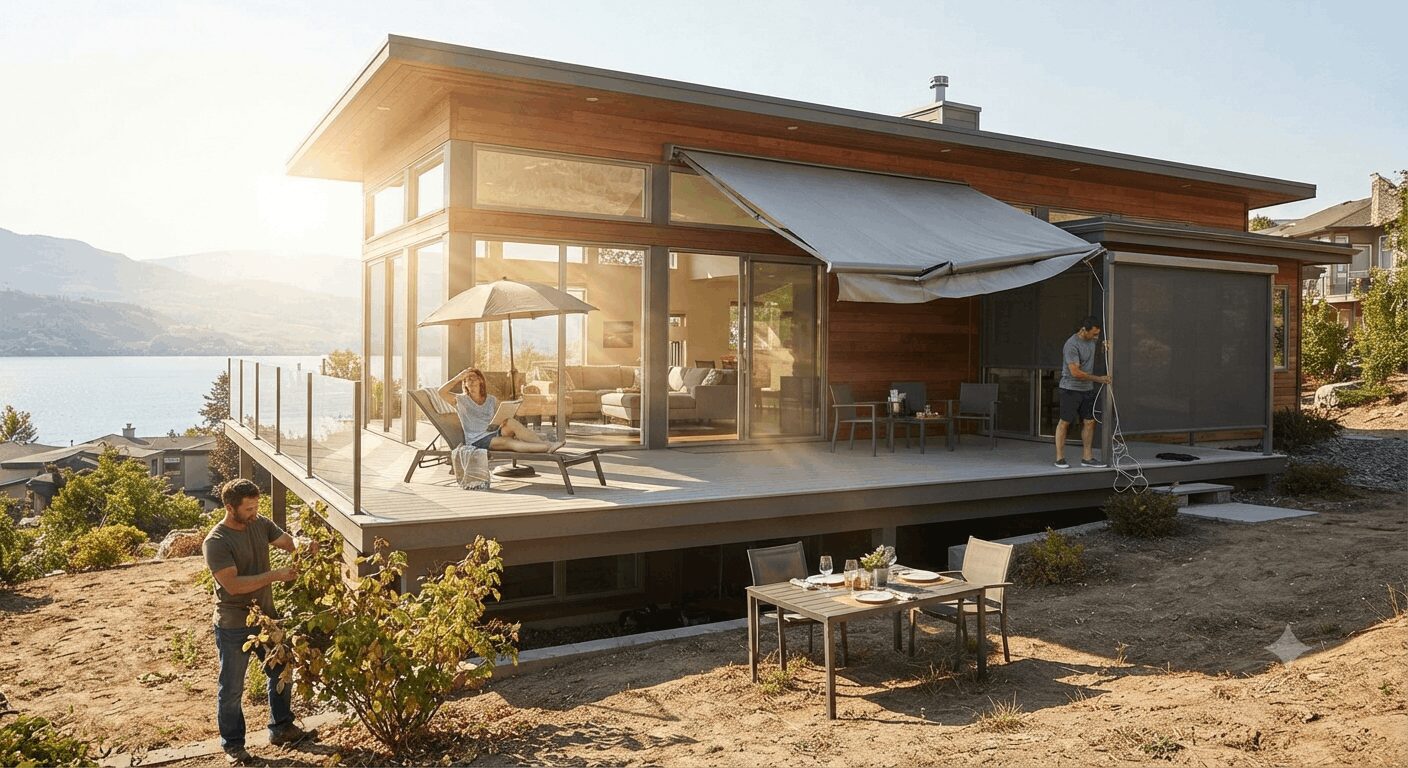
The good news is there are solid options for just about every situation. Retractable awnings are a popular middle ground, they extend when you need shade and retract when you don’t, which works well for patios that get sun at varying times of day. Exterior roller shades are a good fit for larger areas or homes that want broader, more consistent coverage without manually adjusting anything. And for homeowners who want something more permanent, patio covers offer year-round protection without needing to think about it season to season.
Solving These Problems with the Right Shading Strategy
Here’s the thing about most of these problems: they don’t usually come from a lack of effort. Homeowners buy umbrellas, hang curtains, try a few DIY fixes. The issue is that generic, one-size-fits-all shading rarely accounts for the specific way the Okanagan sun hits a particular yard or window.
A shading setup that’s actually designed around your home’s orientation, whether that’s a west-facing patio or south-facing windows, tends to solve these problems more completely and for longer. There’s also a nice side benefit here: better shading often means better energy efficiency, since your home isn’t absorbing as much unwanted heat in the first place. That translates into real savings over a full summer, not just a more comfortable afternoon.
For homeowners dealing with more than one of these issues at once, which is common, custom shading solutions tend to work better than piecing together separate fixes for each problem. A setup built around your specific layout can address heat, glare, UV damage, and weather durability all at once, instead of solving one thing while ignoring the rest.
FAQs
Why do west-facing patios get so hot in the Okanagan?
West-facing patios catch direct sun during the hottest part of the afternoon, when temperatures are already at their peak, leading to significant heat buildup by evening.
What shade solution works best for windy conditions?
Properly installed retractable awnings or exterior roller shades with reinforced mounting tend to hold up far better in wind than portable umbrellas or lightweight shade sails.
How can I stop my outdoor furniture from fading?
Adding reliable shade coverage over furniture areas, rather than relying on furniture covers alone, is the most effective way to slow down UV-related fading.
Is a permanent shade structure worth it for Okanagan summers?
For homeowners who use their outdoor space regularly throughout the season, a permanent structure like a patio cover often pays off in durability and consistent comfort compared to seasonal alternatives.
Bottom Line
Okanagan homeowners deal with predictable shade challenges each summer, from heat buildup to fading furniture. Most of these problems come down to using the wrong shade type or coverage for the space. The right patio shade or window solution can solve them for good. Ready to fix yours? Explore custom shading solutions built for the Okanagan climate.