Retractable Screens for Commercial Storefronts and Restaurants: What Business Owners Should Know
Commercial spaces are increasingly designed to blur the line between indoors and outdoors. Restaurants want more comfortable patios, retailers want inviting storefronts, and hospitality businesses want outdoor areas that can be used for longer throughout the year. Commercial retractable screens offer a practical way to achieve this without permanently enclosing an open space. They can help manage insects, sunlight, airflow, and changing weather while preserving the flexibility and appearance of the property.
What Are Commercial Retractable Screens?
Commercial retractable screens are screening systems designed for business environments where standard residential screens may not be suitable. They can cover entrances, patios, terraces, storefronts, outdoor dining areas, and other openings, then retract when the space needs to remain completely open.
Unlike a permanent enclosure, a retractable screen gives a business more control over how its space is used. The screen can be deployed when protection is needed and stored away when it is not.
These systems are available in different configurations, materials, and operating styles. Smaller applications may work well with manual systems, while larger or frequently used openings can benefit from motorized retractable screens.
Commercial installations also tend to require more attention to durability and sizing. Busy restaurants, cafés, retail properties, and hospitality venues may operate their screens frequently, making proper materials, construction, and installation particularly important.
Why Are Retractable Screens Popular for Restaurants?
For many restaurants, the patio is more than an attractive feature. It can be an important part of the customer experience and the overall usable space of the business. The challenge is that outdoor areas are exposed to conditions that can make dining uncomfortable.
Retractable screens for restaurants can help address several of these issues without turning a patio into a permanent enclosed room.
Make Outdoor Dining More Comfortable
Outdoor dining can be enjoyable when temperatures are comfortable and the weather cooperates. However, insects, direct sunlight, wind, and occasional rain can quickly change the experience.
A properly selected screen can create a more comfortable buffer between diners and the surrounding environment. Depending on the screen material and configuration, it may provide insect protection, reduce sun exposure, and help manage airflow around the seating area.
This can make a restaurant patio more appealing to customers while giving staff greater flexibility when conditions change.
Get More From Restaurant Patios
A restaurant may already have a valuable outdoor area, but that space is not always comfortable enough to use consistently. Retractable patio screens can help make that area more functional without permanently changing its open-air character.
When the weather is pleasant, screens can remain retracted and the patio can feel completely open. When insects, glare, or other outdoor conditions become an issue, the screens can be lowered to provide additional protection.
That flexibility is one of the main advantages over permanent barriers.
How Retractable Screens Benefit Commercial Storefronts
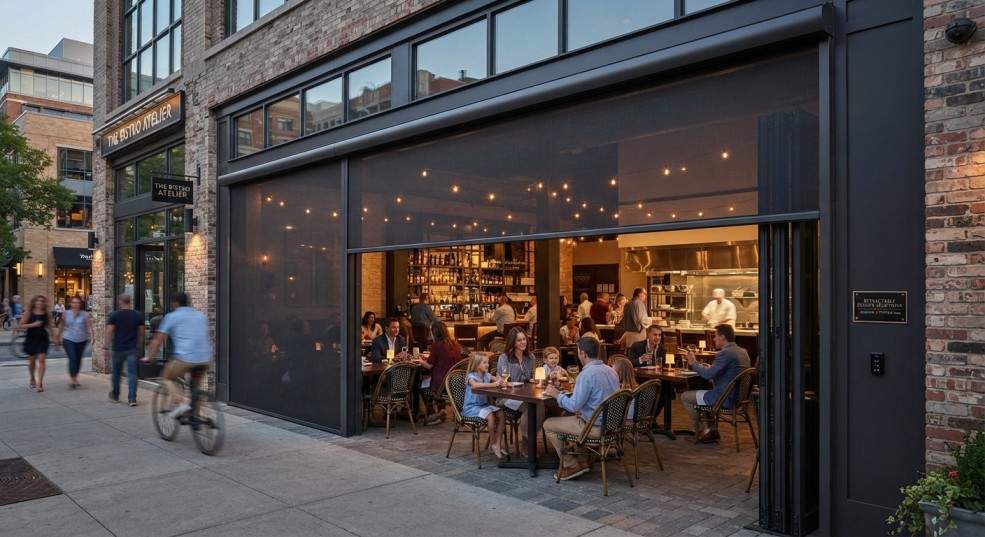
Restaurants are not the only businesses that can benefit. Commercial storefronts often have large entrances or openings that need to remain accessible and visually appealing.
Retail businesses, cafés, hospitality properties, offices, and event venues may all have areas where a traditional fixed screen would be impractical.
Retractable systems allow businesses to control the opening without permanently blocking it. When retracted, the screen has minimal visual impact. When extended, it can provide a useful barrier against insects, sunlight, and certain weather conditions.
For businesses that depend on an inviting appearance, this balance can be especially valuable.
Managing Large Openings
One of the biggest considerations in a commercial project is the size of the opening. Large patio doors, storefronts, terraces, and open-air areas can require specialized solutions.
Large openings often benefit from systems specifically designed and measured for the space rather than an off-the-shelf product. The dimensions, mounting conditions, screen configuration, and operating method all need to work together.
This is where custom-fit screens can make a difference. A properly sized system can integrate more cleanly with the existing structure while providing smoother operation.
Insect and Pest Protection Without Losing Fresh Air
Keeping outdoor areas comfortable does not necessarily mean closing them off completely.
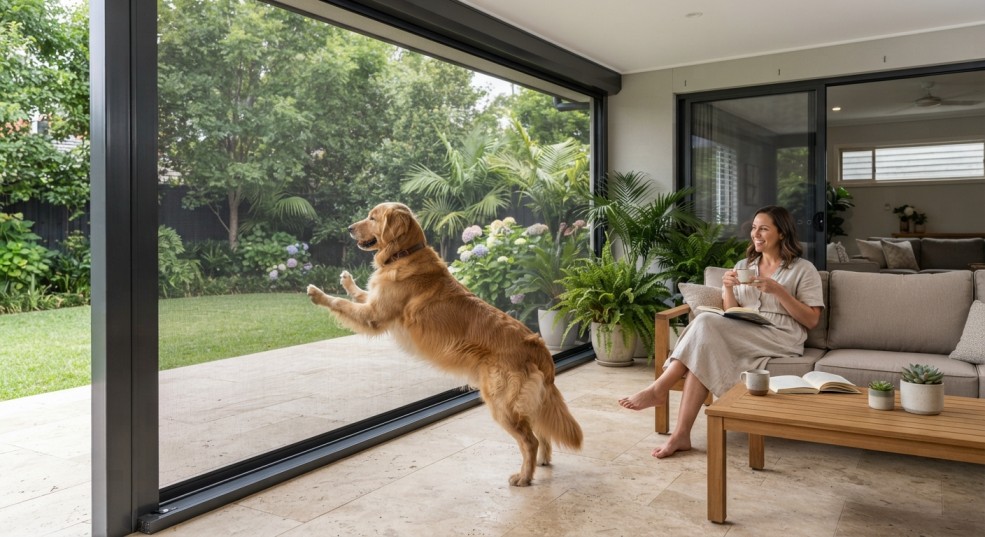
One of the most useful features of screening is the combination of pest protection and ventilation. A screen can create a physical barrier against many unwanted insects while allowing air to continue moving through the space.
For restaurants, this can be particularly useful around patios and outdoor dining areas. Customers can enjoy fresh air without being as exposed to mosquitoes, flies, and other pests.
The goal is not to make an outdoor space feel sealed in. Instead, the right screen should help create a more controlled environment while retaining the advantages of being outdoors.
UV Protection and Solar Shading
Sunlight is another consideration for commercial outdoor spaces. A patio that receives intense afternoon sun may become uncomfortable even when the temperature itself is manageable.
Depending on the material selected, retractable screens can provide UV protection and contribute to solar shading. Solar-screen materials can help reduce direct sunlight and glare, making seating and other customer areas more comfortable.
The right balance is important. Businesses may want to reduce heat and glare while still maintaining visibility and a connection with the outdoors. Screen openness, fabric type, color, and location can all influence the final result.
Weather Protection for Outdoor Commercial Spaces
Outdoor areas are naturally vulnerable to changing weather. Retractable screens can provide a degree of weather protection, although the amount of protection depends on the specific system and environmental conditions.
For example, some installations can help reduce exposure to wind or light rain. Others may be primarily intended for insects and solar control.
Wind and rain protection should therefore be considered during the planning stage rather than treated as a standard feature of every screen. The property’s location, opening size, screen material, and installation conditions all matter.
A professional assessment can help determine what type of system makes sense for the environment.
Commercial Motorized Screens: Are They Worth It?
For businesses with large openings or screens that need to be operated frequently, commercial motorized screens can offer a significant convenience advantage.
Rather than manually raising or lowering a screen, staff can operate motorized retractable screens using the system’s control mechanism. This can be particularly helpful when screens are installed across wide openings or in areas that are difficult to reach.
Motorization may be worth considering for:
- Large patios and outdoor dining areas
- Multiple commercial screens
- Frequently used restaurant openings
- Large storefront openings
- Areas where manual operation would be inconvenient
Motorized operation is not automatically the best choice for every project. A smaller opening with occasional use may be perfectly suited to a manual system. The important thing is matching the operating method to how the business actually uses the space.
Why Custom-Built Screen Systems Matter
Commercial properties rarely have identical layouts. One restaurant may have a straightforward patio opening, while another may have several connected sections, unusual dimensions, or architectural features that need to be accommodated.
Custom-built screen systems allow the design to be adapted to the property rather than forcing the property to work around a standard product.
Accurate measurements are an important part of this process. The screen needs to fit the opening properly, and the housing, tracks, and other components need to be positioned correctly.
Aluminum Frames and Side Tracks
An aluminum frame / aluminum side tracks can provide the structural support required for the screen system. Aluminum is commonly used in screening applications because it combines durability with a relatively clean, architectural appearance.
The side tracks also play an important role in guiding the screen as it moves. Proper alignment can contribute to smooth operation and a finished appearance that integrates with the building.
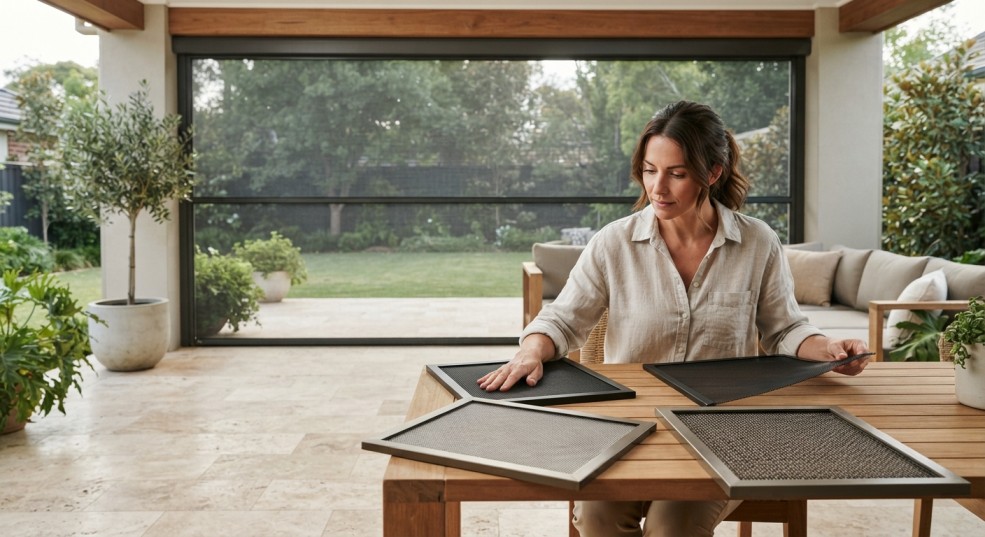
Choosing the Right Fiberglass Mesh
The mesh is one of the most noticeable parts of a retractable screen, but choosing the right material involves more than simply selecting a color.
Fiberglass mesh is one option commonly used in screening systems. Different screen materials and openness levels can affect visibility, airflow, insect protection, solar control, privacy, and durability.
A business should consider what it wants the screen to accomplish. A restaurant focused on insect control may have different requirements from a retail storefront primarily looking to reduce glare. A patio exposed to strong sunlight may require different solar characteristics from a shaded commercial entrance.
Rather than assuming there is one universally best screen material, it makes sense to select the mesh based on the environment and intended use.
Energy Efficiency and Customer Comfort
Retractable screens can also play a role in managing the conditions around a commercial building.
Solar shading can reduce direct sunlight entering certain areas, while screening can help create more comfortable transitional spaces. In some applications, better control over sunlight and outdoor conditions may contribute to energy efficiency by reducing the need for cooling in adjacent areas.
The exact impact depends on the building, orientation, glazing, climate, screen material, and how the space is operated. Screens should therefore be viewed as one part of a broader approach to comfort and environmental control.
For customers, the immediate benefit may simply be a more pleasant place to sit, shop, dine, or spend time.
Privacy and Comfort in Indoor-Outdoor Spaces
Not every commercial space needs maximum visibility. Hotels, restaurants, rooftop lounges, and private event areas may also value a greater sense of separation.
Depending on the mesh, retractable screens can provide varying degrees of privacy and comfort while still maintaining airflow and natural light.
This can be useful when creating flexible indoor-outdoor spaces where a business wants the atmosphere of an open area but also needs more control over the surroundings.
Because mesh openness and visibility can vary, these preferences should be discussed before selecting a system.
Why Professional Installation Matters
Even a high-quality screen can perform poorly if it is not properly measured or installed. Professional installation is particularly important for commercial applications involving large openings, motorized components, or custom configurations.
A professional installer can evaluate the opening, determine the appropriate configuration, take precise measurements, and ensure the tracks and housing are correctly positioned.
Installation also provides an opportunity to consider practical factors such as access, screen operation, mesh selection, mounting surfaces, and the way the system will be used by employees and customers.
For a commercial property, getting these details right from the beginning can make everyday operation much easier.
Maintaining Commercial Retractable Screens
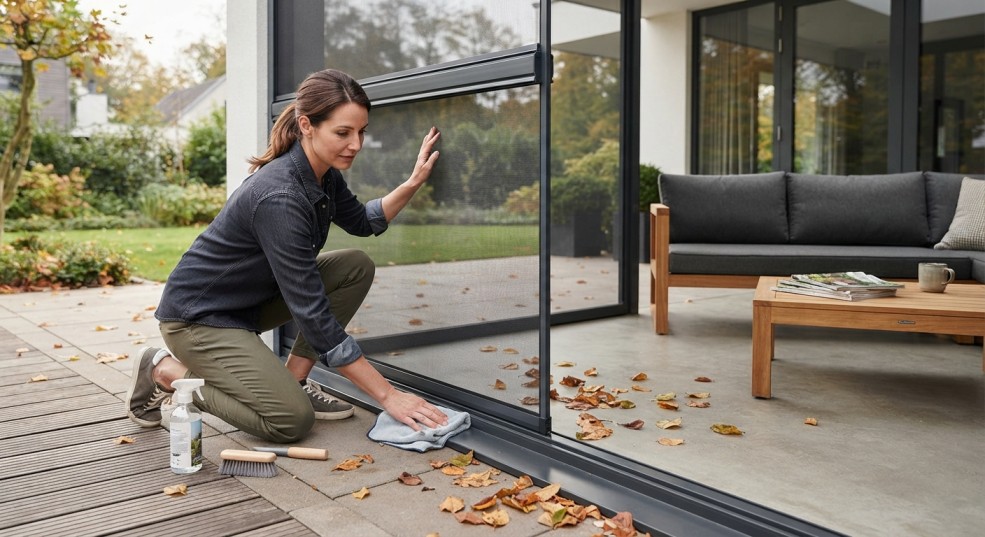
Commercial screens are often exposed to more frequent use than residential systems, so routine care should not be overlooked.
Regularly removing dirt and debris from the screen, tracks, and frame can help keep the system operating smoothly. Businesses should also inspect the mesh and hardware periodically for signs of damage or excessive wear.
Motorized systems may require additional attention depending on their design. Always follow the manufacturer’s maintenance recommendations rather than applying generic products or procedures to every system.
Promptly addressing small problems can also help prevent them from becoming larger and more disruptive issues.
Are Commercial Retractable Screens Right for Your Business?
The answer depends largely on how the space is used. A restaurant with a busy patio may benefit from screens that improve outdoor dining and provide insect and solar protection. A retailer may be more interested in maintaining an open storefront while controlling glare and pests.
Businesses should consider the size of their openings, frequency of use, exposure to sun and weather, desired privacy, mesh requirements, and whether motorization would improve convenience.
The objective is not simply to install a screen. It is to create a solution that fits the property’s layout and supports the way the business operates.
Frequently Asked Questions
Are retractable screens suitable for restaurants?
Yes. Retractable screens can be useful for restaurant patios, outdoor dining areas, terraces, and other open spaces. Depending on the configuration, they can provide insect protection, solar shading, airflow, and some weather protection while preserving the flexibility of an open-air environment.
Can commercial retractable screens cover large openings?
Yes, many commercial systems can be designed for larger openings. Custom measurements and the appropriate screen configuration are important when dealing with wide storefronts, patios, or other expansive spaces.
Are motorized retractable screens better for businesses?
Motorization can be particularly convenient for large or frequently operated screens. However, whether it is worthwhile depends on the size of the installation, frequency of use, accessibility, and the business’s preferences.
Do retractable screens provide insect protection?
Yes. Screen mesh acts as a physical barrier against many insects while allowing air to pass through. The level of protection depends on the mesh type and installation.
Can retractable screens protect a patio from wind and rain?
Some systems can help reduce exposure to wind and light rain, but performance varies by product, material, installation, and weather conditions. Retractable screens should not automatically be considered a replacement for a fully enclosed structure.
Are commercial retractable screens custom-made?
Many commercial installations are customized to the dimensions and requirements of the property. Custom-fit screens can be particularly useful for unusual or oversized openings.
Bottom Line
For restaurants, retailers, and other businesses, retractable screens can turn underused outdoor areas into more comfortable and flexible spaces. From outdoor dining and restaurant patios to commercial storefronts and large openings, the right system can provide insect protection, ventilation, solar shading, UV protection, and added weather control. Choosing the appropriate mesh, frame, operation method, and installation approach is key to getting lasting value from a commercial screen system.