Exterior Shading Systems in BC: Building Considerations
British Columbia’s diverse climate and evolving building practices have made exterior shading systems an increasingly important part of home and commercial design. Far more than a visual upgrade, the right shading solution helps manage solar heat gain, improve indoor comfort, and support energy efficiency. From building orientation to local weather conditions, several factors influence which system will perform best, making thoughtful planning essential for long-term comfort and durability.
Why Building Orientation Matters
Every building interacts with the sun differently. The direction a home or commercial property faces has a significant impact on how much sunlight enters through its windows and how much heat builds up inside throughout the day.
Understanding building orientation is one of the first steps in designing an effective exterior shading strategy. A shading solution that performs well on one side of a property may be less effective on another because the angle and intensity of sunlight change throughout the day and across the seasons.
Planning for sun exposure early allows homeowners, architects, and builders to create spaces that remain comfortable without relying solely on mechanical cooling.
South-Facing Windows
In British Columbia, south-facing windows receive the greatest amount of sunlight over the course of a day. During the summer, this consistent exposure can significantly increase solar heat gain, warming interior spaces even when outdoor temperatures are only moderately high.
Well-designed horizontal shading, roof overhangs, or retractable systems can reduce direct summer sunlight while still allowing natural light into the home. Because the sun sits lower in the sky during winter, these solutions can also support seasonal solar access when warmth is beneficial.
West-Facing Windows
West-facing windows present a different challenge.
They receive intense afternoon sunlight when outdoor temperatures are typically at their highest. This combination often results in uncomfortable indoor conditions, increased glare, and greater demand on cooling systems.
Because afternoon sun strikes windows at a lower angle, adjustable shading solutions often provide more effective sun control than fixed architectural features alone.
Understanding Solar Heat Gain and Overheating
As British Columbia experiences warmer summers and more frequent heat events, preventing overheating has become an important design consideration for both new and existing buildings.
Solar Heat Gain
Solar heat gain occurs when sunlight passes through glazing and warms interior surfaces such as floors, walls, and furniture. Once this heat enters the building, it becomes much harder to remove.
Large expanses of glass can create bright, inviting spaces, but without appropriate shading they may also contribute to excessive indoor temperatures during sunny weather.
Exterior shading helps interrupt this process before heat reaches the glass, making it one of the most effective ways to improve comfort naturally.
Cooling Loads
When buildings absorb more heat, cooling equipment must work harder to maintain comfortable temperatures.
Higher cooling loads place greater demand on air conditioning systems and heat pumps, increasing electricity consumption throughout the summer.
Reducing solar heat gain through exterior shading can lessen this demand, allowing cooling systems to operate more efficiently while maintaining stable indoor temperatures.
Building Envelope Performance
A high-performing building envelope includes insulation, windows, air barriers, and other components that help regulate heat transfer.
Exterior shading should be viewed as a complementary strategy rather than a replacement for proper insulation or energy-efficient windows.
Together, these systems create a layered approach to temperature control. While the building envelope slows heat movement, exterior shading prevents much of that heat from entering in the first place.
The result is a home that feels more comfortable while placing less strain on heating and cooling equipment.
Designing for Comfort Throughout the Year
Comfort involves more than simply lowering indoor temperatures. Effective exterior shading also improves how interior spaces feel and function throughout the day.
Thermal Comfort
Thermal comfort refers to maintaining temperatures that feel pleasant and consistent regardless of outdoor conditions.
Without shading, rooms exposed to direct afternoon sunlight often develop noticeable hot spots. Bedrooms, living rooms, and home offices can quickly become uncomfortable during peak summer hours.
Exterior shading reduces these temperature fluctuations, creating a more balanced indoor environment where every room remains enjoyable to use.
Visual Comfort
Bright sunlight can create significant glare on televisions, computer monitors, and mobile devices.
Improving visual comfort isn’t about eliminating daylight altogether—it’s about controlling how sunlight enters a space.
By reducing glare while preserving outdoor views, shading systems create interiors that are brighter, easier to work in, and more comfortable for everyday activities.
Daylighting
Natural light remains one of the most valuable design elements in any building.
Thoughtfully designed daylighting strategies aim to maximize sunlight without introducing excessive heat or glare.
Exterior shading helps achieve this balance by filtering intense summer sun while allowing softer natural light to illuminate interior spaces.
Instead of darkening a room, properly selected shading creates brighter, more comfortable environments throughout the year.
Exterior Shading and Passive Solar Design
Modern building design increasingly embraces passive solar design, which uses the sun’s natural energy to improve comfort while reducing dependence on mechanical systems.
Although passive design often focuses on capturing winter sunlight, controlling unwanted summer heat is equally important.
Exterior shading supports passive solar principles by allowing buildings to benefit from seasonal changes.
For example, roof overhangs may block high-angle summer sunlight while permitting lower winter sun to enter living spaces.
Adjustable shading systems offer even greater flexibility, allowing homeowners to respond to changing weather throughout the year.
This approach reflects broader climate-responsive design principles, where buildings adapt to local environmental conditions instead of relying exclusively on heating or cooling equipment.
Choosing the Right Exterior Shading System
Not every property requires the same type of shading. The most effective solution depends on building orientation, window size, architectural style, and how each space is used.
Fixed Shading Devices
Fixed shading devices include permanent architectural elements such as overhangs, canopies, and structural projections.
Because they remain in place year-round, fixed systems perform best where sun angles are predictable and consistent.
They require minimal maintenance while becoming an integrated part of the building’s design.
However, their inability to adjust with changing weather means they may not always provide the flexibility some homeowners prefer.
Adjustable Shading Devices
Adjustable shading devices provide greater control over sunlight, ventilation, and privacy.
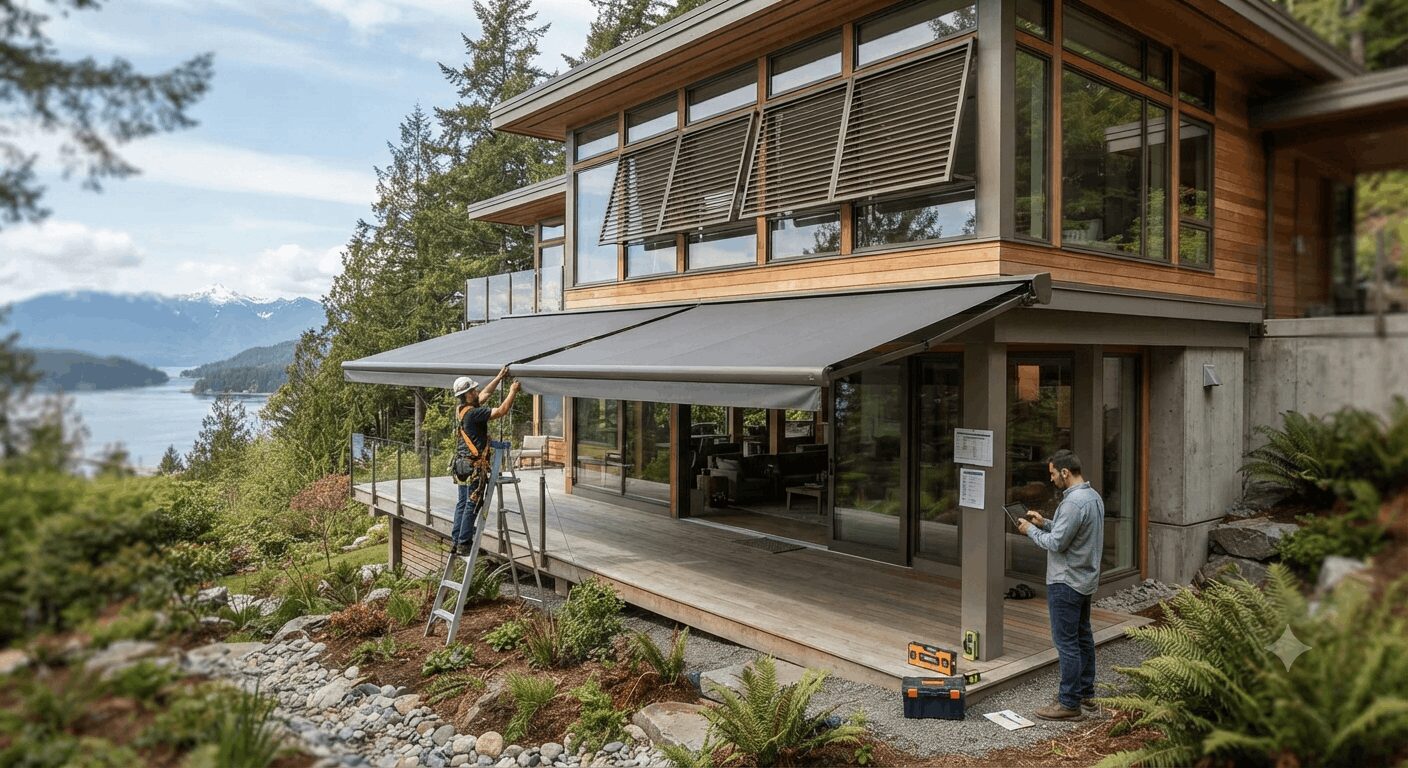
Retractable awnings allow homeowners to create shade when temperatures rise while preserving open skies during cooler weather.
Exterior roller shades offer excellent protection for large windows, patios, and outdoor seating areas by reducing heat and glare without blocking outward visibility.
Louvres, including modern louvered roof systems, allow users to adjust blade angles throughout the day, balancing sunlight, airflow, and weather protection according to changing conditions.
This adaptability makes adjustable systems particularly valuable in British Columbia, where weather patterns can vary considerably between seasons and even within the same day.
BC Weather and Material Selection
British Columbia’s climate presents unique challenges for exterior products.
Depending on location, properties may experience heavy rainfall, strong winds, prolonged UV exposure, snow accumulation, or rapid seasonal temperature changes.
Because exterior shading remains exposed to these conditions year after year, selecting products built for weather resistance is essential.
Durable aluminum components, corrosion-resistant finishes, high-performance fabrics, and quality hardware all contribute to longer service life and dependable operation.
Professional installation is equally important. Proper mounting ensures shading systems withstand local weather conditions while operating safely and efficiently for many years.
Energy Efficiency and BC Building Standards
Improving energy efficiency has become a major focus in residential and commercial construction throughout British Columbia.
As buildings become more airtight and better insulated, preventing overheating has become increasingly important.
Exterior shading contributes by reducing cooling demand before indoor temperatures rise, helping buildings maintain comfortable conditions with less mechanical cooling.
While building codes and standards continue to evolve to improve building performance and occupant comfort, exterior shading complements these broader energy goals by supporting sustainable building practices and reducing unnecessary heat gain.
Rather than viewing shading as an optional upgrade, many homeowners and designers now consider it an important component of high-performance building design.
Why Every Building Needs a Customized Shading Strategy
No two buildings experience sunlight in exactly the same way.
Window placement, roof design, surrounding trees, neighboring buildings, and landscaping all influence how much solar exposure a property receives.
Lifestyle also plays an important role. A family that frequently entertains outdoors may have different priorities than someone focused primarily on improving indoor comfort.
These variables make custom shading solutions the most effective approach for many homes and commercial properties.
A professional assessment considers building orientation, glazing size, climate conditions, and intended use before recommending a shading system.
Instead of relying on a generic solution, customized planning helps ensure each installation delivers the right balance of comfort, appearance, durability, and long-term performance.
Frequently Asked Questions
Do BC building codes require exterior shading?
While exterior shading is not universally required, modern building standards increasingly recognize the importance of managing overheating, improving occupant comfort, and supporting energy-efficient building design.
How does building orientation affect exterior shading?
Building orientation determines how much sunlight reaches different areas throughout the day. South-facing windows typically receive prolonged sunlight, while west-facing windows experience intense afternoon heat that often requires additional shading.
What’s the difference between fixed and adjustable shading systems?
Fixed systems remain permanently in place and provide consistent protection, while adjustable systems such as retractable awnings, exterior roller shades, and louvres allow homeowners to control shade based on changing weather and seasonal conditions.
Does exterior shading improve energy efficiency?
Yes. By reducing solar heat gain before sunlight enters the building, exterior shading lowers cooling demand, improves thermal comfort, and supports overall energy efficiency.
Which shading system works best for west-facing windows?
Adjustable systems are often ideal because they provide greater flexibility to block intense afternoon sunlight while allowing natural light and outdoor views when desired.
Bottom Line
Choosing exterior shading systems in British Columbia involves much more than selecting a style that complements your property. Building orientation, solar heat gain, climate, weather resistance, and evolving building standards all influence long-term performance. By considering these local factors and investing in custom shading solutions designed for your specific building, you can improve comfort, support energy efficiency, and create indoor and outdoor spaces that perform well through every season.