What Happens to Rolling Shutters During Power Outages?
A power outage can raise an obvious concern for homeowners with electric roller shutters: what happens if the electricity goes off while the shutters are closed? In most cases, a motorized rolling shutter simply stops operating when its power supply is interrupted. However, that doesn’t necessarily mean you’re stuck. Manual overrides, emergency release systems, and battery backup can provide alternatives, depending on how your shutter is designed.
Do Rolling Shutters Work During a Power Outage?
Standard motorized rolling shutters rely on electricity to power the motor and control system. When a power cut occurs, the motor generally stops, which means the shutter can no longer operate through its usual remote control or wall switch.
The shutter will normally remain in whatever position it was in when the power failure occurred. If it was fully closed, it would usually stay closed. If it was partially open, it may remain in that position.
What happens next depends on the system. Some rolling shutters have a manual override that allows the shutter to be operated without electricity. Others can be equipped with battery backup or another form of backup power, allowing motorized operation to continue for a limited period.
So, a power outage doesn’t automatically mean a rolling shutter is permanently stuck. The important question is whether the system has a way to operate when its normal electrical supply is unavailable.
What Happens to Motorized Rolling Shutters When the Power Goes Out?
When electricity is interrupted, the motor no longer receives the power it needs to raise or lower the shutter. The control system may also stop responding.
You might press the remote control or wall switch and get no response. That’s usually expected during a complete power failure rather than an indication that the shutter itself has suddenly developed a fault.
The main concern is access. If a rolling shutter is protecting a doorway, garage, storefront, or other entrance, you’ll want to know how it can be opened without electricity.
This is why emergency operation should be considered when choosing a motorized rolling shutter—not after the first power outage occurs.
What If the Shutter Is Fully Closed?
A fully closed shutter will generally remain closed during a power outage unless it has backup power or a manual operating mechanism.
From a security perspective, this can actually be beneficial. A closed shutter can continue acting as a physical barrier even when the electrical system isn’t operating. The challenge is getting through it when access is required.
For this reason, emergency access should always be part of the planning process for motorized shutters installed over frequently used entrances.
What If the Shutter Is Partially Open?
A partially open shutter may remain in its existing position until power is restored or an alternative operating method is used.
If the shutter is left partly open during an outage, consider whether this creates a security or weather-protection concern. If you have a manual override or battery backup, you may be able to close or open the shutter as needed.
Can You Open a Rolling Shutter During a Power Outage?
Yes, in many cases, but it depends on the shutter’s design.
The most common solutions are a manual override, an emergency manual release, or a backup power system.
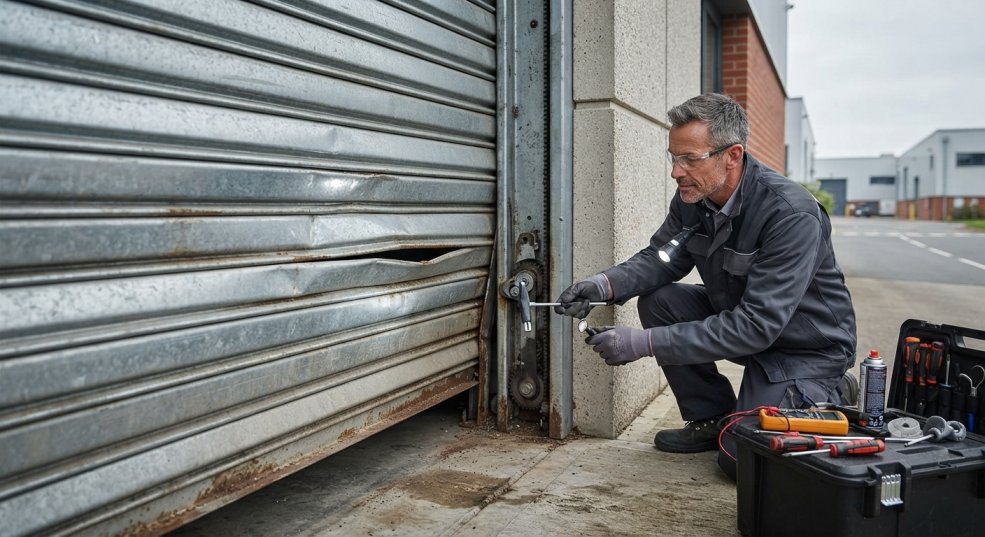
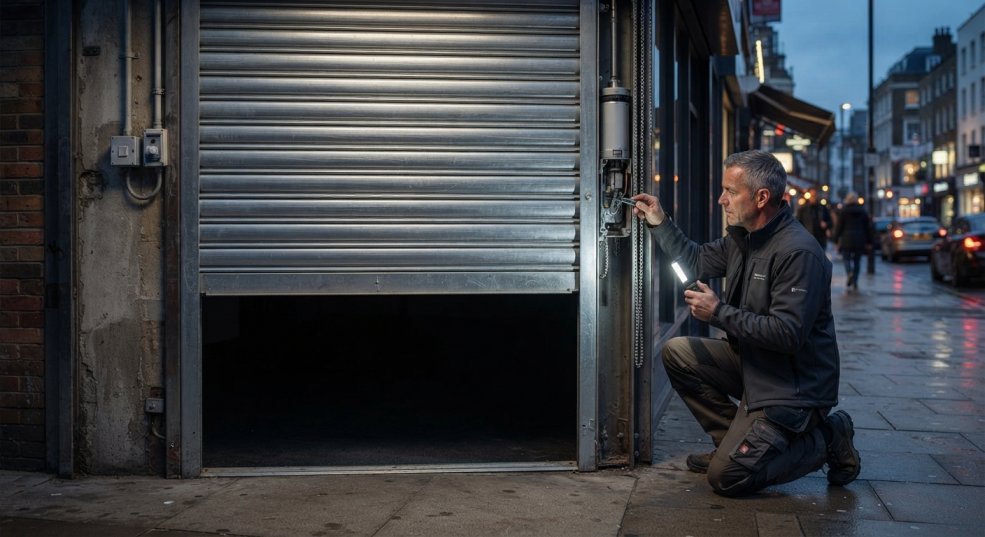
A manual override allows the shutter to be operated without relying on the main electrical supply. The exact mechanism varies between systems. Some may use a crank handle, while others can incorporate a pull cord or pull-chain or another type of mechanical release.
The important point is to understand how your particular shutter operates before an emergency happens. If you’re unsure where the release is located or how it works, it’s better to ask a professional than to experiment when access is urgently needed.
What Is a Manual Override and How Does It Work?
A manual override is a mechanical method of operating a motorized shutter when the electrical supply isn’t available.
Under normal circumstances, the motor handles the opening and closing process. During a power failure, the manual mechanism provides another way to move the shutter.
This can be particularly valuable for doors and entrances where being unable to operate the shutter isn’t simply inconvenient, it can prevent people from entering or leaving a building.
Manual operation can also be useful if the motor develops a fault for reasons unrelated to a power outage.
The exact operation differs between products, so always follow the manufacturer’s instructions. Never force a shutter if the manual mechanism doesn’t operate normally.
Can Battery Backup Keep Rolling Shutters Working?
Battery backup can allow a motorized rolling shutter to continue operating even when the main power supply has failed.
Instead of drawing electricity directly from the building’s electrical supply, the motor can temporarily use stored energy. This can be especially convenient because you can continue using the shutter’s normal motorized operation rather than switching to a manual release.
The amount of operation available depends on the battery capacity, shutter motor, system design, and how frequently the shutter is cycled.
Battery backup isn’t necessarily the right solution for every property. However, it can be worth considering if your shutters cover important entrances or if power outages are a recurring concern.
Battery Backup vs Manual Override
These two solutions solve the same basic problem in different ways.
Battery backup provides continued electrical operation for a limited period, while a manual override allows the shutter to be operated without relying on electricity at all.
For some properties, having both options can provide an extra layer of flexibility. The appropriate setup depends on the shutter, the building, and the access requirements.
Can a UPS or Generator Power Rolling Shutters?
Battery backup isn’t the only form of backup power available.
A UPS (uninterruptible power supply) can provide temporary electricity to compatible equipment when the main supply fails. Depending on the motor and system requirements, this can help maintain operation during a short power outage.
A generator can provide power for longer outages and may be particularly useful for commercial properties or buildings where several essential systems need to remain operational.
However, backup power systems must be appropriately sized and installed. A generator or UPS isn’t automatically compatible with every rolling shutter motor. Electrical requirements should be assessed by a qualified professional.
Will the Remote Control or Wall Switch Work During a Power Outage?
Normally, no.
A remote control may have its own battery, but that doesn’t mean it can power the shutter motor. The motor and control system still need an available power source.
The same applies to a wall switch. The switch can send an operating command, but it generally cannot move the shutter if the motor has no electricity.
If your system has battery backup, the situation is different. The backup system can keep the motor and control system powered, allowing the remote control or wall switch to continue functioning within the available backup capacity.
Are Rolling Shutters Still Secure During a Power Outage?
A power failure doesn’t automatically make a rolling shutter insecure.
If the shutter is closed, it can continue providing a physical barrier even though the motorized operation is unavailable. In fact, one advantage of rolling shutters is that their physical construction doesn’t disappear when the electricity goes out.
The bigger consideration is access.
If you need to open the shutter during an outage, you need a reliable way to do so. A properly installed manual override or backup power system can help maintain both access and security.
For commercial properties, this is particularly important. A storefront or business may depend on rolling shutters for both security and daily access, so emergency operation should be considered before installation.
What About Smart Home Integration?
Smart home integration can make motorized rolling shutters more convenient during normal operation. Depending on the system, homeowners may be able to control shutters through apps, schedules, smart devices, or other connected controls.
However, smart technology doesn’t eliminate the need for emergency planning.
If the shutter has no electricity, a smartphone command can’t make a motor run unless the system has an appropriate backup power source. Internet connectivity and the smart control system itself may also be affected during an outage.
Smart features are useful, but they should complement, not replace a reliable emergency access method.
What Happens When Power Is Restored?
Once the electrical supply returns, most motorized rolling shutters can resume normal operation.
Depending on the control system, some shutters may simply start responding again, while others may require a reset or reinitialization.
After a significant power outage, it’s a good idea to check that the shutter is operating normally. Listen for unusual sounds and make sure it opens and closes smoothly. Also check whether it stops at the correct positions.
If the shutter behaves differently after power restoration, don’t assume the outage itself caused permanent damage. There may be an underlying electrical, mechanical, or control-system issue that needs professional attention.
What Should You Do During a Power Outage?
The first step is to avoid repeatedly pressing the remote or wall switch. If the main power is unavailable, doing so generally won’t restore operation.
Instead, determine whether your system has a manual override, emergency manual release, or battery backup. If a manual mechanism is provided, use it according to the manufacturer’s instructions.
Don’t force a shutter that won’t move. Excessive force can damage the curtain, guide rails, motor, or manual mechanism.
If the shutter is protecting an essential entrance and you cannot operate it safely, contact a qualified professional rather than attempting an improvised repair.
How Can You Prepare Your Rolling Shutters for a Power Outage?
The best time to think about emergency operation is before the power goes out.
Start by finding out exactly how your rolling shutters are designed to operate without electricity. If there’s a manual release, make sure you know where it is and that it remains accessible. If your property relies heavily on the shutters, consider whether battery backup or another backup power solution would provide useful peace of mind.
Regular maintenance also matters. A manual override won’t be much help if it’s damaged or inaccessible, and a backup system won’t provide reliable operation if the shutter itself has been neglected.
For businesses, staff should also know the correct emergency procedure.
Manual vs Motorized Rolling Shutters During a Power Outage
Manual rolling shutters don’t depend on electricity, so a power failure doesn’t affect their basic operation. They do, however, require physical effort to open and close.
Motorized rolling shutters offer greater convenience and automatic operation under normal circumstances, but they depend on an electrical supply unless equipped with a manual override or backup power.
Neither approach is automatically better for every property. The right choice depends on how often the shutter is used, the importance of automation, access requirements, and how your property handles power failures.
Frequently Asked Questions
Will rolling shutters open automatically when the power comes back?
Usually, power restoration allows the motorized system to operate again, but whether the shutter moves automatically depends on its control system and settings.
Can I manually open an electric roller shutter?
If the shutter has an emergency manual release or manual override, you may be able to operate it without electricity. The mechanism varies by system.
Do all motorized rolling shutters have battery backup?
No. Battery backup is system-dependent and may be an optional feature rather than a standard component.
Will my remote control work during a power outage?
Not normally unless the shutter’s motor and control system have a suitable backup power source.
Can a generator run a rolling shutter?
A compatible generator can potentially provide the required electricity, but the system should be correctly configured and installed by a qualified professional.
Are rolling shutters safe during a power failure?
A closed shutter can continue providing a physical security barrier during an outage. However, properties should have a reliable plan for emergency access.
Choose a Rolling Shutter System With Power Outages in Mind
Power outages don’t have to leave you wondering how you’ll operate your rolling shutters. The key is choosing a system with the right combination of motorized convenience, emergency access, manual override, and backup power for your property. Whether you’re protecting a home, garage, storefront, or commercial entrance, Shutters and Shade can help you understand your rolling shutter options and choose a solution suited to your needs.